
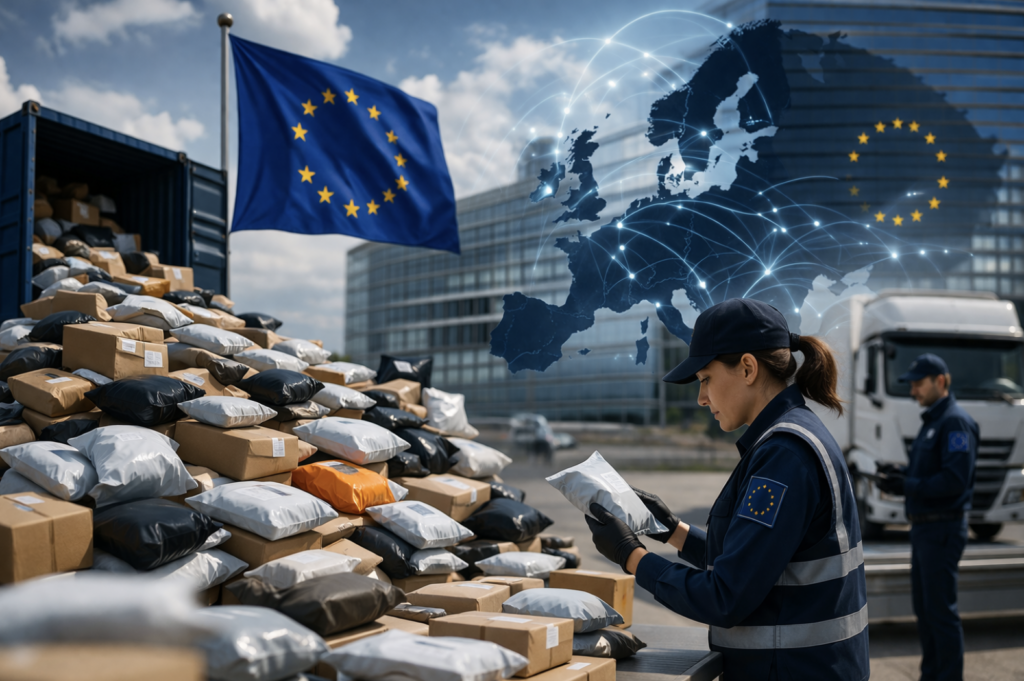
BRUSSELS, Belgium – The European Union has agreed to impose a new handling fee on the flood of low-value parcels entering its borders, marking a significant shift in how the bloc regulates cross-border e-commerce. Beginning November 1, every online purchase imported from outside the EU will incur a fee, with national authorities responsible for collection. The measure, still awaiting final pricing from the European Commission, is designed to offset mounting administrative costs tied to the rapid growth of small-package imports.
An E-Commerce Boom Driving Policy Change
At the center of the policy shift is the explosive rise of platforms such as Shein, Temu, and AliExpress, which have reshaped consumer habits across Europe. According to the European Commission, approximately 12 million parcels entered the EU daily in 2024—an unprecedented volume driven largely by ultra-low-cost goods shipped directly from manufacturers to consumers.
In Germany alone, industry estimates suggest that hundreds of thousands of daily deliveries originate from Shein and Temu, generating billions of euros in annual revenue and attracting tens of millions of buyers. The scale has strained customs systems, increased inspection costs, and raised concerns about product safety and regulatory compliance.
Toward a Level Playing Field
The handling fee will complement a broader overhaul of EU customs policy. Beginning in July, parcels valued under €150—previously exempt from duties—will face a €3 charge. By 2028, the EU plans to eliminate the duty-free threshold entirely, ensuring that all imported goods are subject to customs duties regardless of value.
European officials say the goal is to create fairer competition between domestic retailers and foreign sellers, many of whom currently benefit from regulatory gaps and cost advantages. Critics of fast-growing platforms have long argued that such disparities distort the market while allowing potentially unsafe or non-compliant products to enter with limited oversight.
Industry and Global Implications
The new measures are expected to reverberate across the global e-commerce ecosystem, affecting not only Chinese-founded platforms but also multinational players like Amazon that rely on cross-border logistics networks. Analysts note that while the added costs may eventually be passed on to consumers, companies could also absorb part of the burden to remain competitive in Europe’s price-sensitive market.
Internationally, the EU’s move aligns with a broader trend of governments tightening oversight of cross-border e-commerce. Policymakers in the United States and other regions have similarly debated closing de minimis loopholes and strengthening customs enforcement amid rising imports of low-cost goods.
A Temporary Measure With Long-Term Goals
EU officials describe the handling fee as an interim solution ahead of a planned digital customs platform intended to streamline processing, improve transparency, and enhance enforcement capabilities. Beyond revenue, the reform aims to modernize customs operations, safeguard consumers, and ensure that global trade flows comply with European standards.
As Europe recalibrates its approach to global online retail, the new policy signals a turning point—one that could reshape pricing, logistics, and competition in the world’s fastest-growing segment of trade.