
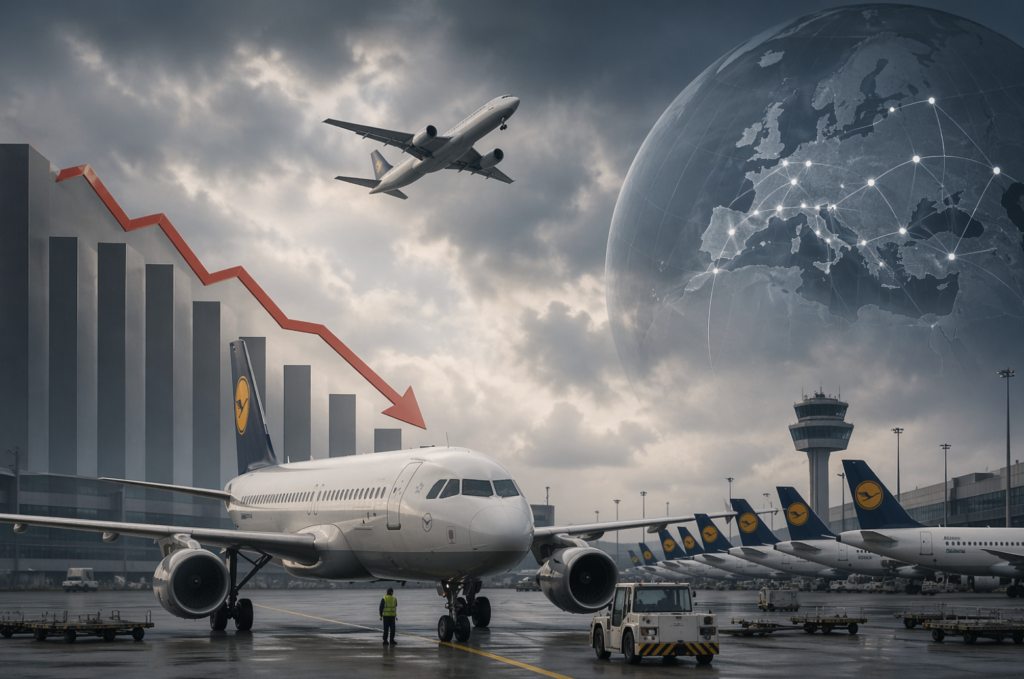
FRANKFURT, Germany — Lufthansa announced plans to cancel approximately 20,000 flights by October, marking one of its most significant capacity reductions in recent years as soaring fuel prices and shifting market dynamics reshape the aviation industry.
The decision, unveiled Tuesday, reflects mounting pressure on European carriers as kerosene costs have surged—reportedly doubling since the onset of the Iran-related geopolitical crisis. Beginning this week through the end of May, roughly 120 daily connections will be cut, with further details on a revised summer flight schedule expected by the end of April.
Strategic Retrenchment Amid Rising Costs
The airline group said the cuts would primarily target “economically unviable short-haul routes,” reducing overall seat capacity across its network by just under 1 percent. Executives estimate the move will save more than 40,000 tons of fuel, underscoring how energy volatility is now a central factor in airline planning.
Industry analysts note that European carriers are increasingly prioritizing profitability over volume, a shift accelerated by fuel price instability, supply chain disruptions, and environmental pressures to reduce emissions. Similar capacity adjustments have been observed among international competitors, particularly on marginal regional routes.
Network Realignment Across European Hubs
The restructuring will ripple across Lufthansa’s multi-hub system, which includes Frankfurt, Munich, Vienna, Zurich, Brussels, and Rome. While several routes from Frankfurt and Munich are being eliminated—such as connections to smaller cities in Poland and Norway—capacity is being expanded in Zurich, Vienna, and Brussels.
Flights to destinations including Cork, Gdansk, Ljubljana, and Stuttgart will be rerouted through alternative hubs, part of a broader effort to consolidate operations and improve load factors. The airline emphasized that passengers will retain access to its global network despite the changes.
Workforce Impact and Union Negotiations
The cuts follow last week’s abrupt announcement of the shutdown of Lufthansa CityLine, its regional subsidiary. Pilots and cabin crew are expected to be absorbed into other group airlines where possible, though negotiations with labor representatives are underway regarding severance packages and redeployment terms.
Labor unions, including UFO, have called for robust social protections, highlighting broader concerns across Europe’s aviation sector about workforce stability amid ongoing restructuring.
Global Context: Fuel, Geopolitics, and Industry Shifts
The airline’s move comes as global aviation faces renewed uncertainty tied to geopolitical tensions affecting energy markets. Analysts point to the Iran-related crisis as a key driver of fuel price volatility, compounding challenges already posed by post-pandemic demand fluctuations and stricter climate regulations.
Despite the disruptions, Lufthansa said it expects “stable fuel supply” for its summer schedule, citing hedging strategies and diversified sourcing efforts. The company is also exploring long-term measures, including efficiency improvements and sustainable aviation fuel investments, to mitigate future shocks.
A Turning Point for European Aviation
Lufthansa’s decision highlights a broader recalibration underway in the airline industry, where profitability, resilience, and sustainability are increasingly taking precedence over expansion. As carriers adapt to a more volatile global environment, passengers may see fewer direct routes—but potentially more stable operations.
Whether this marks a temporary adjustment or a lasting shift in European air travel remains to be seen.