
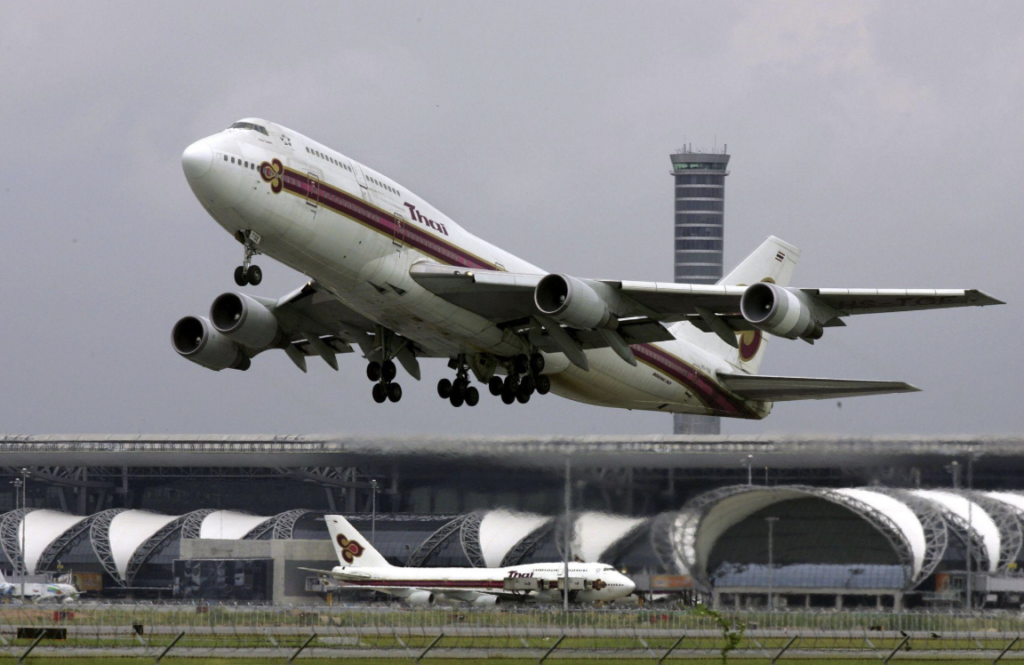
BANGKOK, Thailand – Commercial flights between Thailand and several Middle Eastern countries are gradually resuming after partial easing of airspace restrictions linked to escalating geopolitical tensions in the region. Routes to Kuwait and Bahrain, however, remain suspended, according to the Civil Aviation Authority of Thailand (CAAT).
Sarun Benjanirat, deputy director of the CAAT, said portions of Middle Eastern airspace remain closed following military strikes by the United States and Israel on Iranian targets and the resulting regional security concerns. Some countries have since adjusted their aviation security protocols, allowing limited air traffic to resume.
Flights between Thailand and Saudi Arabia and Oman have returned to normal operations, while services to the United Arab Emirates are gradually restarting after operating under severe limitations earlier in the week.
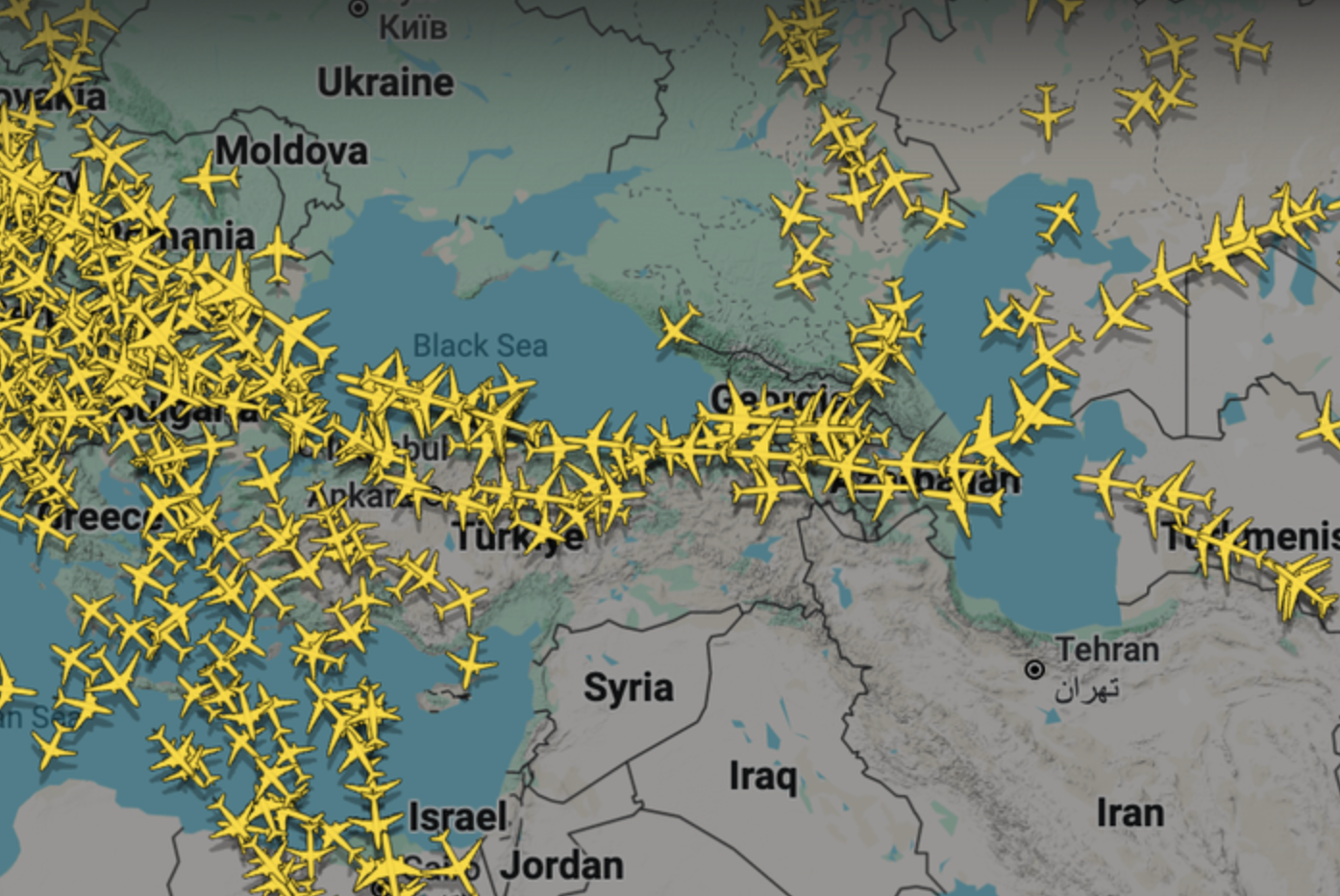
Source: FlightRadar24
Emirates has resumed a reduced schedule of two daily flights from Dubai to Thailand, compared with its usual seven daily services. The airline plans to increase frequencies in the coming week as conditions stabilize. Other Gulf carriers, including Etihad Airways and Qatar Airways, have also restarted limited services, though seat availability on some routes is being selectively allocated to priority passenger groups.
Southeast Asian Airlines Face Rising Costs Amid Oil Market Volatility
The renewed geopolitical tensions are placing fresh pressure on airline operating costs worldwide, particularly through rising jet fuel prices. Kerosene remains one of the largest expenses for airlines, and recent uncertainty in global oil markets has pushed fuel prices higher.
Thai Airways announced plans to raise ticket prices by 10 to 15 percent to offset rising fuel costs. The airline’s chief financial officer, Cherdchom Thetsathirasak, said the adjustment was necessary to maintain profitability as operating expenses increase.
Demand for long-haul flights from Thailand to Europe has surged in recent weeks, partly as travelers redirect itineraries away from Middle Eastern transit routes amid security concerns. According to Thai Airways, many of its European flights are currently operating at roughly 90 percent seat occupancy.
If oil prices continue climbing, the airline said it may introduce higher fuel surcharges on international tickets. Over the next two weeks, ticket availability on both European routes and other international flights is expected to remain limited due to strong demand.
ASEAN and East Asian Airlines Navigate a Fragile Recovery

Photo: AirAsia
The disruptions underscore how sensitive Asia’s aviation sector remains to geopolitical shocks even as the industry continues to recover from the pandemic-era collapse in travel.
Airlines across Southeast Asia and East Asia are adopting similar strategies to absorb rising costs. Budget carrier AirAsia has already adjusted fares and fuel surcharges, though it has not disclosed specific increases. Air India is introducing new fuel surcharges on domestic and international routes beginning in mid-March, while Air New Zealand has also signaled impending fare increases.
Industry analysts note that airlines in ASEAN and East Asia depend heavily on Middle Eastern hubs—including Dubai, Doha and Abu Dhabi—as key transit gateways linking Asia to Europe and Africa. Any disruption to these corridors can ripple across airline networks throughout the region, forcing carriers to reroute flights, reduce frequencies or absorb higher fuel consumption.
At the same time, the region’s travel demand remains robust. Strong outbound tourism from China, Southeast Asia and Japan has helped keep international flights full even as ticket prices rise.
Thai Airways’ Financial Recovery Faces New External Risks
Despite the current uncertainties, Thai Airways has shown signs of financial recovery. The carrier reported a net profit of 30.9 billion baht for the 2025 fiscal year, reversing a loss of 26.9 billion baht the previous year. Revenue rose slightly to about 190 billion baht.
The improvement followed a court-supervised debt restructuring process launched during the pandemic, which helped the airline stabilize its finances and rebuild its network.
Still, airline executives caution that forecasting passenger demand for the second quarter remains difficult. The security situation in the Middle East remains volatile and could shift rapidly, affecting both travel demand and fuel costs.
For airlines across ASEAN and East Asia, the coming months may test the resilience of an industry that has only recently emerged from its deepest crisis in modern history—now facing once again the unpredictable forces of geopolitics and energy markets.
Pictures: Thai Airline, AirAsia, FlightRadar24