
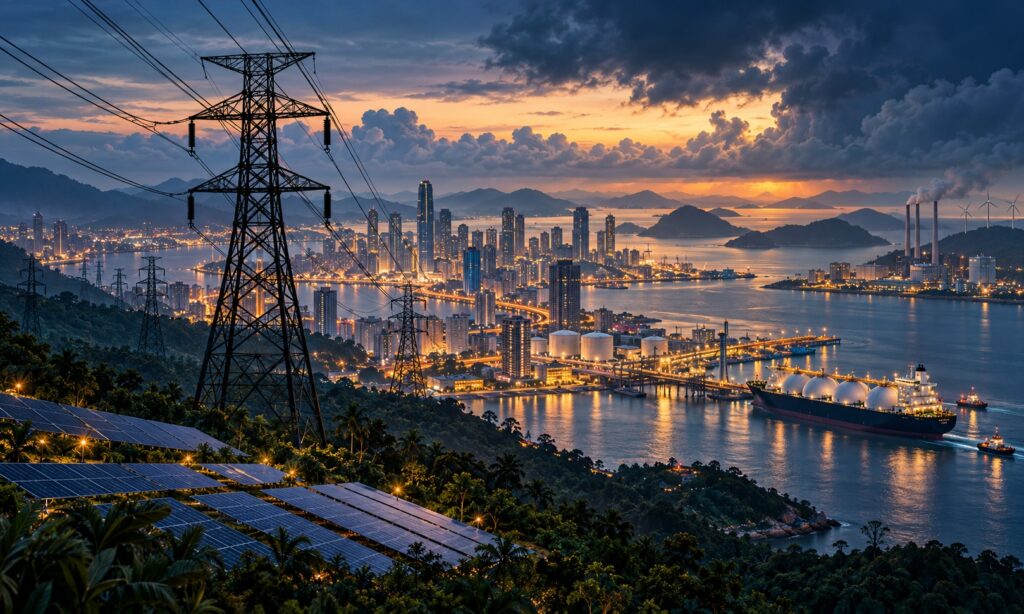
MANILA, Philippines – Southeast Asia’s expanding factories, cities and digital industries are placing greater demands on its electricity systems just as the Iran war makes energy supplies more costly and uncertain. The collision is turning reliable, affordable power into an increasingly urgent test of the region’s economic ambitions.
The International Energy Agency’s new ASEAN Energy Security Review projects annual electricity-demand growth of 5.4 percent during 2026–2030, driven by industry, cooling and data centers. Indonesia will account for approximately 40 percent of additional demand and Vietnam for 26 percent. Across Southeast Asia, energy consumption per person has risen almost 30 percent over the past decade.
National Responses Meet Practical Limits
Governments are confronting different versions of the same problem: securing enough energy without deepening exposure to international shocks.
In the Philippines, officials are exploring regional fuel-stockpiling arrangements as ASEAN energy ministers gather in Manila. But limited storage and inventories constrain emergency preparedness. ASEAN sources more than half the crude used by its refineries from the Middle East, according to Reuters. Christopher Len, a senior fellow at Singapore’s ISEAS–Yusof Ishak Institute, cautioned: “A reserve is a buffer. It is not a strategy.”
Vietnam illustrates the difficulty of translating supply plans into operating infrastructure. Bloomberg reported Tuesday, citing government officials, that only one of 18 planned gas-fired power projects was on schedule and just two had begun construction. Financing, land clearance and power-purchase agreements remain obstacles. Authorities have ordered detailed project timelines, while the trade ministry has warned that delays could contribute to electricity shortages from 2027.
“The Iran war has given governments a bit of a reality check,” Amy Kong of Zero Carbon Analytics told The Associated Press. Putra Adhiguna of Jakarta’s Energy Shift Institute likewise urged faster diversification and a more decisive energy transition.
More Generation Requires Stronger Grids
The IEA identifies a broader vulnerability: imported LNG and coal transmit global price shocks into electricity bills, utility finances and government budgets. Domestic renewables can reduce that exposure, but require stronger networks and greater flexibility.
Regional electricity trading offers another response. Proposed ASEAN interconnections require about $27 billion through 2040, alongside agreements governing transmission charges, operating standards and cost allocation. Hydrogen and biomethane are expected to make only limited contributions before 2030.
Financing Will Determine the Pace
A separate ASEAN Centre for Energy report launched Tuesday identifies financing as a central obstacle. Clean-energy financing costs in the region are at least twice those in advanced economies, it says, reflecting political, regulatory and electricity-purchaser risks. Its recommendations begin with clearer rules and stronger contracts, followed by guarantees and other measures to reduce investment risk.
Together, these findings suggest that Southeast Asia’s energy challenge will be decided as much by institutions and investment conditions as by fuel availability. Emergency measures can buy time. Lasting security will depend on whether governments can turn national expansion plans and regional cooperation pledges into infrastructure that investors will finance and consumers can afford.