
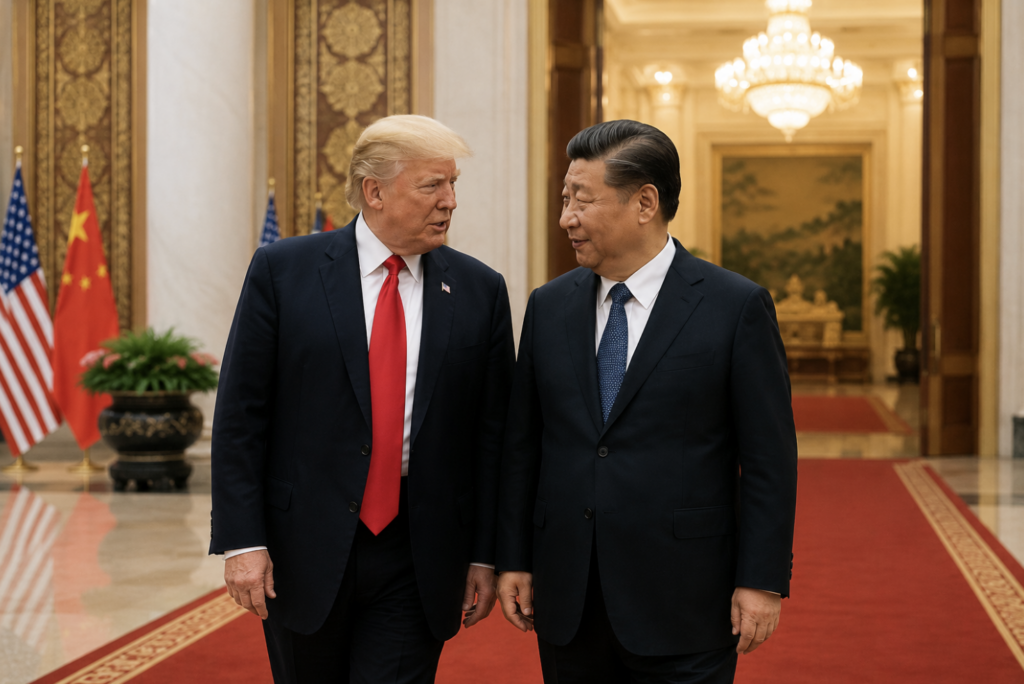
BEIJING, China — U.S. President Donald Trump and Chinese President Xi Jinping concluded a closely watched summit in Beijing with strikingly warm rhetoric, ceremonial symbolism and promises of deeper cooperation, yet with few confirmed agreements to demonstrate a substantive breakthrough between the world’s two largest economies.
After two days of meetings in the Chinese capital, Mr. Trump described the talks as “very successful” and said the two nations had reached “fantastic trade deals, great for both countries.” Chinese leader Xi Jinping called the summit “historic and landmark,” while Chinese officials emphasized the need for “mutual benefit and win-win cooperation.”
Still, beyond optimistic language and carefully choreographed diplomacy, tangible outcomes remained limited and in several cases unverified.
The summit unfolded at a delicate moment in U.S.-China relations. Both governments are attempting to stabilize ties after years of tariffs, technology restrictions, supply-chain disputes and intensifying geopolitical competition stretching from Taiwan to artificial intelligence and critical minerals.
Business leaders and financial markets had hoped the summit would produce clarity on tariffs, export controls and market access ahead of the expiration of the current tariff truce in November. Instead, the meetings largely produced signals of political stabilization rather than detailed policy commitments.
Boeing and Agriculture Emerge as Possible Areas of Cooperation
One of the most notable claims came from Mr. Trump aboard Air Force One, where he told reporters China had agreed to purchase 200 Boeing aircraft, with the possibility of additional commitments for as many as 750 more jets. Boeing acknowledged discussions surrounding aircraft orders, though Chinese authorities stopped short of publicly confirming the scale or timing of any agreement.
If finalized, such purchases would represent Boeing’s most significant re-entry into the Chinese aviation market in nearly a decade. The American aerospace giant had faced years of setbacks in China because of trade disputes, regulatory tensions and broader strategic competition between Washington and Beijing.
Mr. Trump also suggested that China would substantially increase purchases of American soybeans and agricultural goods, potentially delivering political and economic benefits to U.S. farmers ahead of the American election season.
Yet Beijing avoided publicly endorsing these commitments. Chinese Foreign Ministry spokesperson Guo Jiakun responded cautiously, reiterating broad principles of cooperation without validating specific purchases or contracts.
That restraint reflects a familiar pattern in U.S.-China diplomacy: Washington often emphasizes headline commercial wins, while Beijing prefers gradual implementation and ambiguity until agreements are formally signed.
Trade Tensions Persist Beneath the Diplomatic Theater
Despite the summit’s positive tone, fundamental disagreements remain unresolved.
Perhaps most surprising was Mr. Trump’s statement that tariffs were not discussed during his meetings with Xi — a notable omission given that tariffs remain one of the central points of friction in bilateral trade relations.
Under the current arrangement negotiated last October, Washington paused steep tariff increases on Chinese imports while Beijing eased restrictions on exports of rare earth materials essential for electric vehicles, semiconductors and advanced manufacturing.
That temporary truce helped calm global markets and reduced fears of a renewed trade war. But economists warn that without a longer-term framework, uncertainty could quickly return.
Analysts in both Washington and Beijing noted that the summit appeared designed less to solve structural disputes and more to prevent further deterioration in relations.
Chinese state media portrayed the meetings as evidence that stable relations between major powers are essential for global economic recovery. Meanwhile, several American commentators described the summit as a tactical pause rather than a strategic reset.
Technology, AI and Supply Chains Define the New Competition
The presence of executives from industries including artificial intelligence, agriculture, aviation and electric vehicles underscored how economic competition between the United States and China has evolved far beyond traditional trade balances.
Today’s rivalry increasingly centers on technological leadership, semiconductor access, clean-energy supply chains and industrial self-sufficiency.
Washington continues to maintain restrictions on advanced AI chips and semiconductor exports to China, arguing they are necessary for national security. Beijing, meanwhile, has accelerated efforts to reduce dependence on American technology while strengthening domestic manufacturing capabilities.
Recent tensions surrounding rare earth exports highlighted how both nations are leveraging control over critical industrial resources as geopolitical tools.
International observers noted that although both leaders publicly emphasized cooperation, neither side showed signs of retreating from its broader strategic objectives.
European analysts welcomed the reduction in tensions but cautioned that allies remain concerned about growing fragmentation in global trade systems. Asian markets responded positively to the summit’s conciliatory tone, though investors largely withheld judgment pending concrete policy announcements.
Symbolism Takes Center Stage
More than signed agreements, the summit may ultimately be remembered for its symbolism.
Mr. Trump received a lavish diplomatic reception that included an honor guard, a state banquet and access to Zhongnanhai, the highly restricted compound that serves as the center of Chinese Communist Party leadership. The visit projected an image of restored high-level engagement after years of increasingly hostile rhetoric between the two capitals.
Xi’s expected visit to Washington later this year — confirmed by Chinese Foreign Minister Wang Yi — further suggests both governments are seeking a more predictable relationship, even amid ongoing rivalry.
For now, however, the summit leaves the global economy with cautious optimism but few certainties.
The United States and China appear willing to stabilize relations temporarily, yet the deeper disputes over trade, technology, security and global influence remain largely unresolved — ensuring that strategic competition between the two powers will continue to shape the international order for years to come.