
The Airline’s Long-Awaited Skynest Turns a Decade-Old Dream Into a Market Test for the Future of Long-Haul Travel
AUCKLAND, New Zealand — For decades, the dividing line between economy and premium travel has been simple: passengers in the front of the aircraft sleep in beds, while those in the back try to sleep sitting up.
Air New Zealand is attempting to change that.
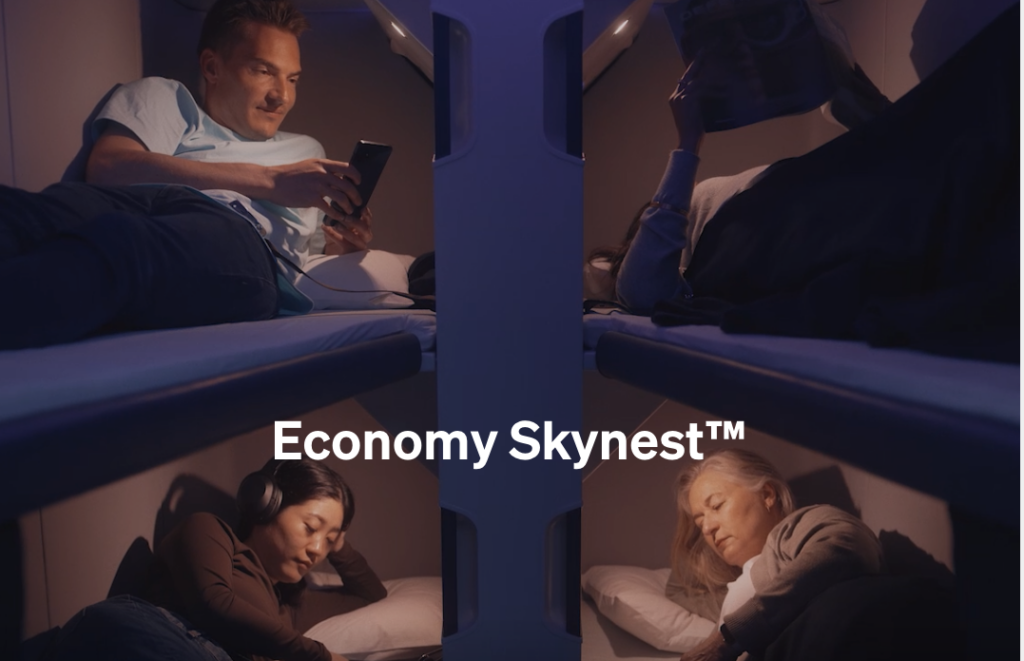
Beginning in November 2026, the carrier will introduce the world’s first commercially available lie-flat sleeping pods designed specifically for Economy and Premium Economy passengers, transforming a concept first unveiled in 2020 into a real-world experiment in airline comfort. The product, known as Economy Skynest, will debut aboard the airline’s newly configured Boeing 787-9 Dreamliners operating on ultra-long-haul routes, starting with Auckland–New York.
The launch is being closely watched across the aviation industry because it addresses one of the most persistent problems in modern air travel: how to sleep on flights that now routinely exceed 17 hours.
A Bed in Economy — But Not a Seat
Unlike traditional premium-cabin beds, Skynest is not attached to a passenger’s seat.
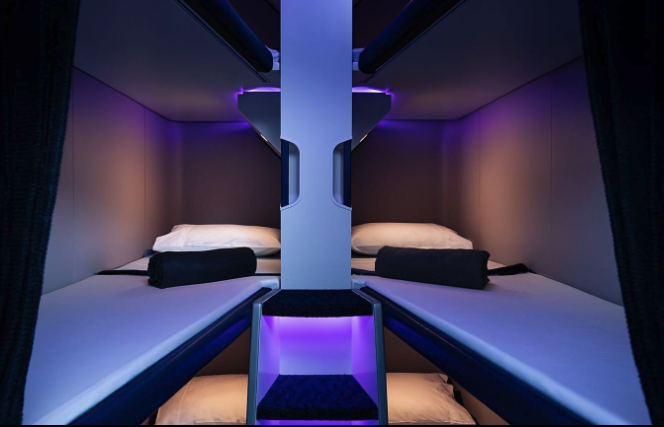
Instead, Air New Zealand has created a separate sleeping zone between the Premium Economy and Economy cabins. The area contains six bunk-style lie-flat pods arranged in three levels, allowing passengers to leave their seats for a reserved four-hour sleep session before returning to their assigned seat.
Each pod includes:
- A full-length mattress
- Fresh bedding and pillow
- Privacy curtain
- Reading light and ventilation controls
- USB charging ports
- Personal storage space
- Amenity kit including eye mask and ear plugs
The beds measure approximately 2.03 meters (6 feet 8 inches) in length, making them suitable for most travelers.
Air New Zealand says the product is designed around sleep science rather than luxury. The objective is not to replicate Business Class, but to give economy travelers a meaningful opportunity to arrive rested after some of the world’s longest flights.
A Premium Experience at an Economy Price?
The airline has set pricing from NZ$ 495 per four-hour session, roughly US$ 290 or € 250 at current exchange rates. The fee is charged in addition to the passenger’s airfare. Initially, travelers will be limited to one session per flight.
The pricing strategy places Skynest in a previously unexplored middle ground:
- Far cheaper than a Business Class upgrade.
- Significantly more expensive than traditional ancillary purchases such as extra-legroom seating.
- Accessible to travelers unwilling or unable to pay several thousand dollars for a premium cabin.
Industry analysts describe the offering as a test of whether passengers value sleep enough to purchase it separately from their seat.
“The question is no longer whether passengers want to sleep,” one aviation analyst observed. “The question is how much they are willing to pay for four hours of genuine rest.”
Why New Zealand Is Leading the Experiment
Few countries understand ultra-long-haul travel better than New Zealand.
Its geographic isolation means that reaching major markets often requires some of the longest nonstop flights in the world. The Auckland–New York service exceeds 17 hours and has become a proving ground for innovations aimed at reducing passenger fatigue.
Air New Zealand previously pioneered the Skycouch, which converts a row of economy seats into a couch-like surface. Skynest represents the next stage of that strategy: moving beyond modified seats toward dedicated sleeping infrastructure.
The airline argues that improving passenger well-being is not merely a customer-service initiative but a commercial necessity for a country dependent on long-distance tourism.
Industry Reaction: Curiosity, Optimism and Skepticism
Initial reaction from aviation media, airline executives and frequent travelers has been overwhelmingly positive, though not without reservations.
Supporters view Skynest as one of the most meaningful cabin innovations introduced in years, particularly because it extends a traditionally premium benefit to economy travelers. Many commentators have described it as a potentially transformative concept for ultra-long-haul routes.
Critics, however, note several limitations:
- Only six pods are available per aircraft.
- Demand may exceed supply on popular routes.
- Four hours may not be sufficient on flights lasting nearly 18 hours.
- The additional fee could deter price-sensitive travelers.
Others question whether airlines can justify sacrificing revenue-generating seats for sleeping facilities unless passengers consistently pay the premium required to make the economics work.
Will Other Airlines Follow?
The broader industry appears to be watching closely.
Major carriers including Qantas and United Airlines have explored enhanced sleep solutions for long-haul passengers, while several airlines have experimented with “economy sleeper” concepts using empty rows or modular seating. None, however, have brought a certified lie-flat bunk-bed product into commercial service at the scale Air New Zealand is attempting.
If Skynest achieves strong occupancy rates and generates meaningful ancillary revenue, analysts expect other airlines operating ultra-long-haul networks to evaluate similar concepts during the next decade. Routes linking Australia, New Zealand, North America and Europe are viewed as the most likely candidates.
The Larger Question
The success of Skynest may ultimately reveal something broader about the future of aviation.
For decades, airlines competed by selling space. Today, they increasingly compete by selling comfort, flexibility and personal well-being.
Air New Zealand’s wager is that sleep itself has become a marketable product.
Beginning this November, passengers crossing the Pacific will decide whether four hours in a bunk bed at 35,000 feet is worth nearly US$ 300.
The answer could reshape the economics of long-haul travel far beyond New Zealand.
Photos: Air New Zealand