
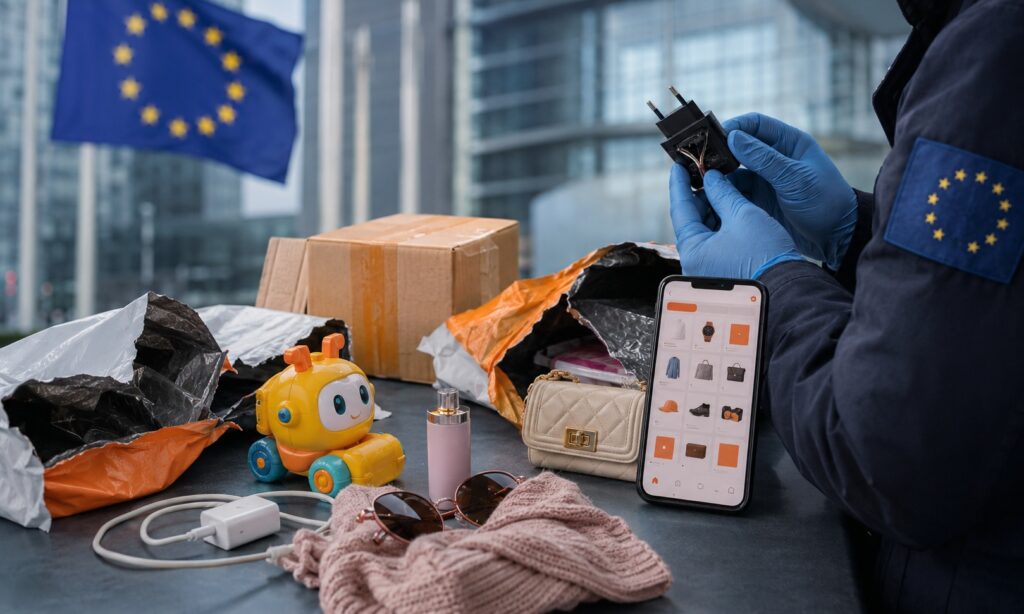
BRUSSELS, Belgium — The European Commission imposed a €550 million fine on AliExpress on Monday, accusing the Chinese online marketplace of failing to adequately identify and curb the sale of illegal, unsafe and counterfeit products to European consumers.
The penalty — the largest issued so far under the European Union’s Digital Services Act — follows an investigation that found counterfeit clothing, unsafe toys and potentially dangerous cosmetics remained available for weeks. In some cases, the platform’s recommendation and advertising systems continued to promote questionable listings before they were removed.
European regulators said AliExpress had underestimated the scale of the problem, devoted too few employees to product monitoring and maintained enforcement policies that allowed penalized merchants to continue trading. A compulsory brand-authorization system intended to deter counterfeiting was understaffed and could be circumvented, according to the Commission.
“Unsafe online shopping experiences are not inevitable,” Henna Virkkunen, the European Commission’s executive vice president responsible for technology policy, said in announcing the decision. Large platforms, she added, must systematically address risks created by the products and sellers operating on their services.
AliExpress, which is owned by Alibaba Group, has until Oct. 20 to submit a corrective action plan. Failure to remedy the violations could result in additional financial penalties. The Commission said the shortcomings covered conduct continuing at least until June 2025.
AliExpress Calls the Penalty Disproportionate
AliExpress disputed the size of the fine, saying it had substantially strengthened its risk-management and consumer-protection systems. The company described the sanction as disproportionate and said it was reviewing the decision and considering its available options, potentially including an appeal.
The company also stressed that it had cooperated with European regulators and had introduced measures intended to detect illegal listings and restrict repeat offenders. The Commission acknowledged those efforts but concluded that they had not produced sufficiently effective results.
No separate formal response from China’s central government was immediately reported. The initial public defense came from AliExpress itself, framing the dispute as one over the adequacy of its compliance improvements and the proportionality of the punishment.
Part of a Wider Crackdown on Low-Cost Marketplaces
The AliExpress decision is not an isolated enforcement action. In May, the Commission fined Temu €200 million after concluding that the platform had failed to properly assess the systemic risks associated with illegal merchandise.
European investigators conducting test purchases on Temu found that many selected chargers failed basic safety tests. Baby toys were also found to contain excessive levels of restricted chemicals or detachable parts that could create choking hazards. Regulators further criticized the company for overlooking the way recommendations and influencer promotions could increase consumers’ exposure to such products. Temu has disputed that decision as well.
Shein, another China-founded global retailer, remains under European scrutiny. Taken together, the investigations show that Brussels is shifting from requesting voluntary improvements to imposing substantial financial consequences.
The policy is directed not simply at inexpensive Chinese goods, but at the systems through which marketplaces evaluate sellers, recommend products and respond to known safety risks. Under the Digital Services Act, very large platforms must examine how their operations can spread illegal products and demonstrate that their safeguards work in practice.
A Parcel System Under Strain
The enforcement campaign comes amid a sharp rise in inexpensive packages entering Europe. About 5.8 billion e-commerce consignments reached the bloc in 2025, according to European figures cited by Reuters. Small packages accounted for roughly 97 percent of shipments, overwhelming a customs system originally designed for far lower volumes.
An E.U.-wide inspection of 20,000 toys and small electronic products imported from outside the bloc found that more than half failed to comply with European product rules. Because the inspection was targeted rather than a statistically representative sample of all imports, its findings should not be applied to every product sold through Chinese platforms. They nevertheless illustrate the scale of the enforcement problem.
European policymakers have responded on several fronts. On July 1, the bloc introduced a €3 customs charge on low-value e-commerce goods and ended the previous duty exemption for consignments worth less than €150. Broader customs reforms are intended to treat online marketplaces more like importers, making them responsible not only for collecting duties but also for ensuring product compliance.
Consumer Protection — and Industrial Competition
For European consumers, AliExpress and similar marketplaces offer an appealing proposition: clothing, cosmetics and household electronics at prices that conventional retailers often cannot match. Yet the lowest advertised price may exclude less visible costs, including short product life, weak warranties, inadequate traceability and risks arising from electrical or chemical defects.
The European argument is also economic. Manufacturers and retailers operating within the bloc must pay for product testing, documentation, recalls, authorized representatives and compliance with environmental and safety rules. When overseas merchants avoid those expenses, European officials say, they gain an unfair price advantage.
European consumer organizations and retail groups have therefore generally welcomed tougher enforcement, describing it as necessary both for public safety and for fair competition. Critics may still question whether large fines and parcel charges will significantly reduce demand, particularly while the price difference between Chinese and European products remains substantial.
For Chinese platforms and exporters, the message is increasingly clear: access to the European market will depend less on removing individual listings after complaints and more on preventive compliance. Marketplaces will be expected to verify sellers, maintain reliable technical records, identify dangerous goods early and prevent recommendation systems from amplifying prohibited offers.
The AliExpress case thus marks a turning point in Europe’s regulation of cross-border commerce. Brussels is no longer treating unsafe marketplace listings as scattered failures by individual merchants. It is placing responsibility on the platforms whose technology, scale and commercial incentives enable those products to reach millions of consumers.
Sources: EU Commission, Reuters