
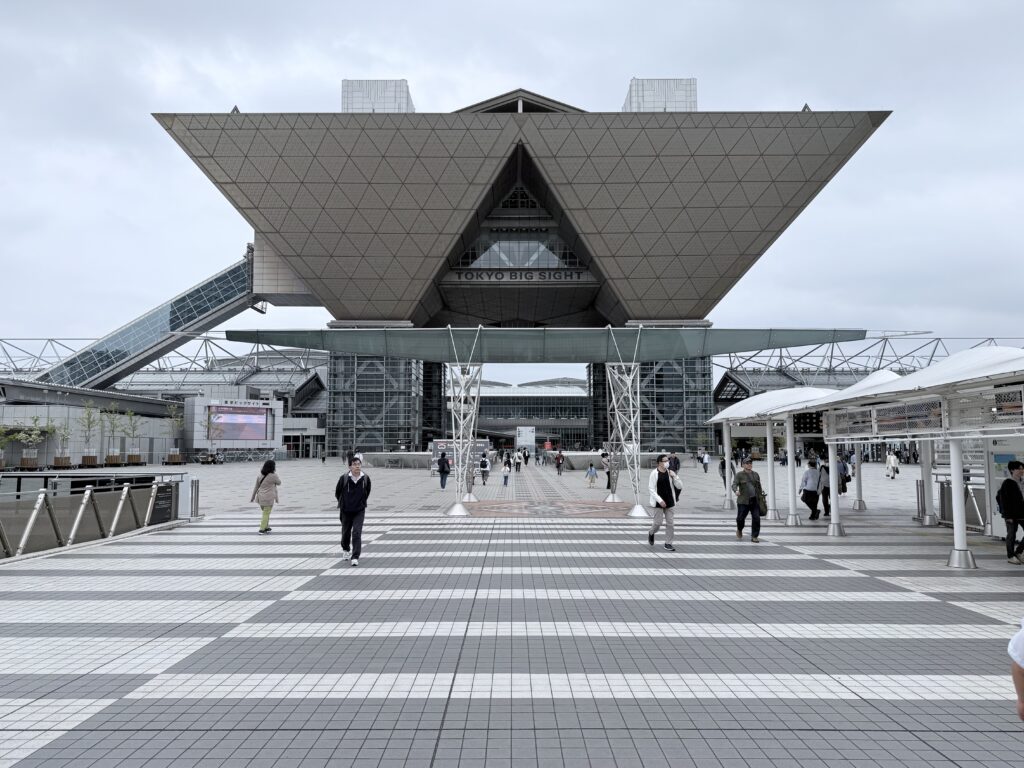
A Global Stage for an Asian Innovation Moment
TOKYO, Japan – When the three-day SusHi Tech Tokyo 2026 conference closed its doors on April 29th, it left behind more than crowded exhibition halls and polished keynote speeches. It offered something rarer: a revealing snapshot of how Japan—and its neighbors in South Korea and Southeast Asia—are repositioning themselves in the global startup hierarchy.
With more than 700 startups and an estimated 60,000 participants, the event has grown into one of Asia’s largest innovation gatherings, blending government ambition, corporate capital, and entrepreneurial experimentation into a single arena.
Yet beyond the scale, what stood out in Japanese and broader Asian media coverage was the duality of the event: a confident display of regional innovation capacity, paired with lingering questions about execution and global competitiveness.
Japan’s Strategic Reawakening
Japanese press coverage framed the conference as a cornerstone of a broader national effort to revive economic dynamism through startups. At the center of this narrative stood Tokyo Governor Yuriko Koike’s ambition to transform the city into a “global hub for startup incubation,” supported by policy tools such as international expansion programs and large-scale funding frameworks.
The messaging was consistent: startups are no longer peripheral actors but essential engines of growth. Prime Ministerial backing reinforced that idea, positioning innovation as a national priority tied to productivity, technological sovereignty, and geopolitical positioning.
This framing reflects a notable shift in Japan’s economic narrative. For decades associated with corporate giants and incremental innovation, the country is now attempting to cultivate a startup culture capable of competing with Silicon Valley, Shenzhen, and Singapore.
But Japanese media commentary also carried a tone of caution. Analysts pointed to structural constraints—limited risk capital, conservative corporate culture, and barriers to scaling globally—that could limit the long-term impact of such initiatives.
In this sense, SusHi Tech Tokyo was both a declaration of intent and a test case.

A Platform for Regional Integration
From an Asian perspective, one of the conference’s most significant features was its role as a regional connector.
Coverage highlighted the presence of startups, investors, and policymakers from across Asia, including Southeast Asia’s emerging ecosystems in Malaysia, Thailand, and Vietnam. While not always the headline focus, these countries were repeatedly referenced in discussions about cross-border expansion, supply chains, and digital infrastructure.
The conference’s structure—combining pitch competitions, business-matching programs, and international partnerships—was explicitly designed to foster collaboration across borders.
For Southeast Asian startups, Tokyo was portrayed not merely as a market but as a gateway to capital, technology partnerships, and global visibility. For Japan, the region represents both an opportunity and a necessity: a fast-growing set of markets where Japanese innovation can scale more rapidly than at home.
Asian media commentary increasingly framed this relationship as mutually reinforcing. Southeast Asia provides dynamism and growth; Japan offers capital, technological depth, and institutional stability.
South Korea and the Competitive Context
Although South Korea was less prominently featured in official programming, regional analysis consistently placed it in the competitive backdrop.
Seoul’s startup ecosystem—often seen as more agile and internationally oriented—serves as a benchmark against which Tokyo is measured. Similarly, Singapore’s role as a regional venture capital hub looms large.
Asian analysts interpreted SusHi Tech Tokyo as part of a broader contest among cities to attract talent, capital, and innovation ecosystems. Tokyo’s strategy, with its emphasis on “sustainable cities” and deep-tech sectors, was seen as an attempt to differentiate itself rather than directly replicate competitors.
This positioning aligns with Japan’s strengths in areas such as robotics, climate technology, and advanced manufacturing—fields that were prominently featured throughout the conference.

The Southeast Asian Lens: Opportunity and Pragmatism
From the perspective of Southeast Asian observers, coverage tended to be pragmatic rather than celebratory.
Malaysia, Thailand, and Vietnam were often discussed as emerging innovation hubs with strong growth potential but still developing infrastructure. For startups from these countries, participation in SusHi Tech Tokyo was less about showcasing technological breakthroughs and more about accessing networks—investors, corporate partners, and international markets.
One recurring theme in regional commentary was the importance of “real deployment” over theoretical innovation. The conference’s focus on practical applications—particularly in AI, climate resilience, and urban infrastructure—resonated strongly with Southeast Asian priorities, where scalability and immediate impact often take precedence over cutting-edge experimentation.
In this sense, the event aligned well with the needs of the region: solutions for rapidly urbanizing societies facing climate risks, infrastructure gaps, and digital transformation challenges.
A Conference of Ideas—or Deals?
Japanese and Asian press alike emphasized the importance of translating conference energy into tangible outcomes.
One of the recurring critiques of Japan’s startup ecosystem has been its difficulty in converting networking opportunities into large-scale deal-making. SusHi Tech Tokyo was explicitly designed to address this gap, with structured matching programs and increased participation from global investors.
Early assessments were cautiously optimistic. The presence of international partners, including European and American accelerators, suggested a growing integration of Tokyo into global innovation networks.
Still, analysts warned that the true measure of success would come months later: funding rounds closed, partnerships formed, and startups successfully expanding beyond domestic markets.

Thematic Focus: Sustainability and Urban Resilience
A defining feature of SusHi Tech Tokyo—frequently highlighted in Japanese media—was its thematic focus on sustainable urban development.
Unlike many technology conferences that prioritize consumer gadgets or digital platforms, this event centered on how technology can address real-world challenges: climate change, disaster resilience, energy systems, and urban infrastructure.
This focus reflects both Japan’s domestic priorities and broader regional concerns. Across Asia, rapid urbanization and environmental pressures are creating urgent demand for scalable solutions.
By positioning itself at the intersection of technology and urban policy, Tokyo is attempting to carve out a niche that aligns with global megatrends while leveraging its own expertise.
Innovation Theater vs. Structural Reform
Despite the generally positive tone of coverage, a consistent undercurrent of skepticism remained.
Asian and Japanese commentators alike questioned whether high-profile events can substitute for deeper structural reform. Conferences can showcase innovation, but they cannot by themselves resolve issues such as regulatory barriers, talent shortages, or cultural resistance to entrepreneurship.
In this regard, SusHi Tech Tokyo was seen as a necessary but insufficient condition for transformation.
The risk, as some analysts noted, is that such events become “innovation theater”—impressive in scale and presentation but limited in long-term impact unless accompanied by sustained policy and market changes.
Conclusion: A Regional Mirror of Ambition
Ultimately, SusHi Tech Tokyo 2026 functioned as more than a conference. It was a mirror reflecting the state of Asia’s startup ecosystems—diverse, rapidly evolving, and increasingly interconnected.
From Japan’s perspective, it signaled a determined effort to reclaim relevance in the global innovation economy. From Southeast Asia’s vantage point, it offered access to capital and collaboration. And from a broader Asian lens, it underscored the intensifying competition—and cooperation—among regional hubs.
The verdict from the press can be summarized as cautiously positive: a well-executed, strategically important event that successfully showcased Asia’s innovation potential, while leaving open the question of whether that potential can be fully realized.
In the end, the significance of SusHi Tech Tokyo may not lie in what happened during its three days, but in what follows after—the deals signed, the startups scaled, and the ecosystems transformed. (AT/hz)
Photos: AT/hz