
BANGKOK, Thailand — Thailand’s government has ordered a nationwide freeze on public transport fares and intensified fuel-price monitoring as escalating tensions in the Middle East push global energy markets into uncertainty.
The directive, issued by Deputy Prime Minister and Transport Minister Phiphat Ratchakitprakarn, follows instructions from Prime Minister Anutin Charnvirakul to prevent transport operators from raising fares during a period of volatile oil prices. Authorities say the measure is intended to protect consumers and prevent rising fuel costs from feeding into broader inflation across the economy.
Under the regulation, operators of taxis, ride-hailing services, motorcycle taxis, buses and other public transport services are prohibited from increasing fares beyond the limits set by law. Officials warned that companies attempting to exploit the situation by raising prices could face fines, regulatory penalties or suspension of operating licenses.
“War Room” Established to Monitor Transport Costs Nationwide
To coordinate the response, the Ministry of Transport has established a central monitoring unit — described by officials as a “War Room” — to track transport prices, fuel supply and logistics conditions across the country.
The monitoring operation works with several key agencies, including the Department of Land Transport, the Department of Rail Transport, the Marine Department and the Civil Aviation Authority of Thailand. These agencies have been instructed to intensify inspections across road, rail, maritime and aviation sectors to ensure fares and freight costs remain within regulated limits.
Government officials say the transport price freeze will remain in place as long as domestic fuel prices are stabilized under government policy.
Diesel Price Cap Used as Economic Buffer
At the same time, Thailand’s Energy Ministry has temporarily capped the retail price of diesel at 29.94 baht per litre, using the country’s Oil Fuel Fund to offset the rising cost of global crude oil. The measure is designed to limit pressure on logistics and transportation costs, which can quickly feed into food prices and the overall cost of living.
Energy policymakers say the subsidy currently covers several baht per litre of diesel and could be extended if global oil markets continue to rise. The government has also indicated it may consider additional steps such as tax adjustments or further subsidies, should energy prices escalate further.
Panic Buying and Fuel Inspections in Several Provinces
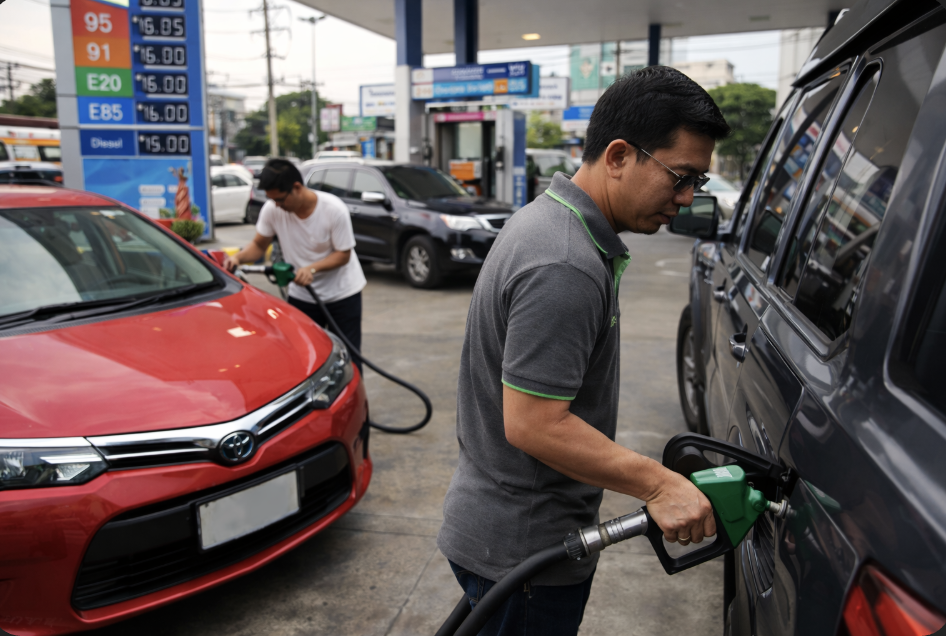
Authorities have also stepped up inspections at fuel stations across multiple provinces after motorists rushed to fill their vehicles amid fears of rising prices.
Inspection teams from provincial commerce offices, energy regulators, and measurement authorities have conducted checks in provinces including Phuket, Rayong, Buriram, and Khon Kaen. Officials reported that most fuel stations continued to operate normally, although unusually high demand led to temporary shortages of certain fuels, such as Gasohol 91 and E20, in some areas.
Local authorities emphasized that the shortages were driven by precautionary buying rather than manipulation or hoarding by fuel retailers.
In Buriram province, local officials warned station operators against withholding fuel or refusing sales without valid reasons, saying businesses found violating regulations could face legal consequences.
Global Conflict Threatens Thailand’s Energy Stability
The government’s intervention comes as the conflict involving the United States, Israel and Iran has heightened fears of disruptions to global oil supply routes, particularly around the Strait of Hormuz — one of the world’s most important energy corridors.
Oil prices have risen sharply in recent days, and the risk premium on global crude markets has increased as traders assess the potential impact of regional instability on energy shipments.
For Thailand — a major importer of crude oil — the stakes are significant. Rising fuel costs could quickly translate into higher transport expenses, inflation and pressure on household spending.
Analysts warn that the conflict could also ripple through Thailand’s wider economy, affecting exports, tourism and logistics. Some estimates suggest that disruptions to Middle Eastern trade routes could threaten up to 60 billion baht in Thai exports if shipping and air routes are interrupted for several months.
Tourism and Aviation Already Feeling the Impact
The effects of the crisis are already visible in the aviation sector. With several Middle Eastern airspaces disrupted, airlines operating between Asia and Europe have begun rerouting flights and raising ticket prices as fuel costs climb.
Tourism analysts say Thailand could feel secondary effects if flight connections through Gulf hub airports become more expensive or less frequent. Even modest increases in fuel prices can ripple through the travel industry, affecting ticket prices, bookings and airline schedules.
Government Signals More Measures if Crisis Escalates
Thai officials say they will continue monitoring energy markets and domestic fuel supplies daily. Transport authorities have pledged to review fare policies regularly and adjust measures depending on developments in global oil prices.
“The government will ensure that transport costs remain fair and that consumers are protected,” the transport minister said after meeting with the prime minister to discuss the impact of the Middle East crisis on Thailand’s economy.
For now, the strategy reflects a familiar approach used by Thailand during previous energy shocks: temporary price caps, fuel subsidies and strict monitoring of the transport sector to prevent inflationary pressures from spreading across the economy.