
Thailand’s Flagship Travel Trade Fair Signals Confidence in Tourism Recovery and Long-Term Investment
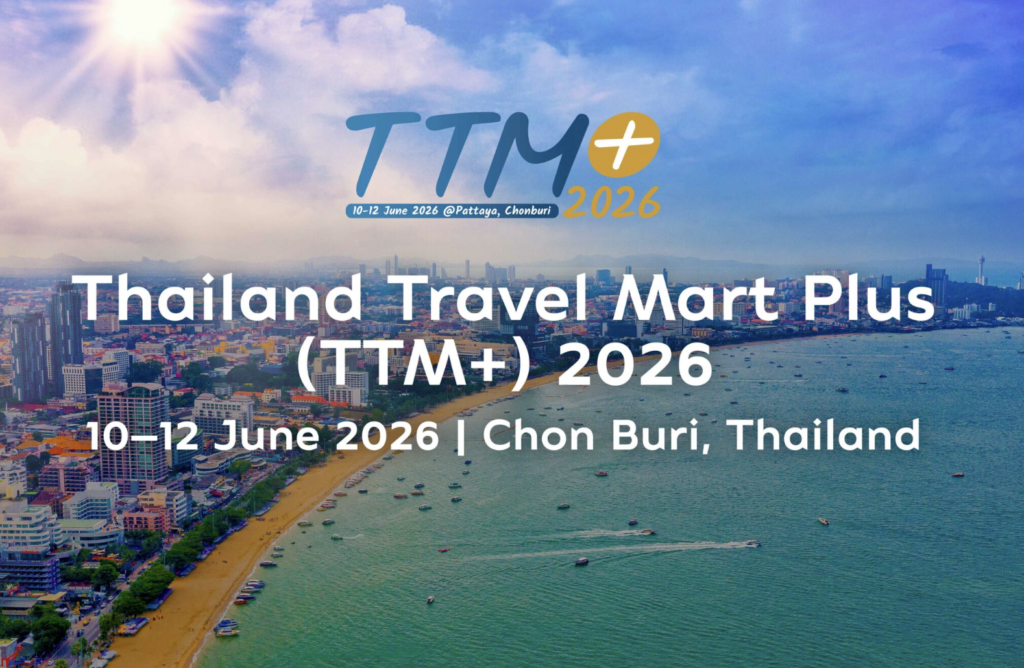
BANGKOK, Thailand – The Tourism Authority of Thailand has confirmed that the 23rd edition of the Thailand Travel Mart Plus (TTM+) will take place from 10 to 12 June 2026 at the NICE Pattaya Convention and Exhibition Center, positioning the country once again at the center of Asia’s tourism and business-events industry.
The annual trade event, widely regarded as Thailand’s premier business-to-business tourism marketplace, arrives at a pivotal moment for the global travel sector. Across Asia-Pacific, tourism boards and private operators are increasingly shifting from volume-driven recovery strategies toward higher-value, sustainability-focused growth models — an evolution Thailand hopes to lead through its “New Thailand” vision and the wellness-oriented campaign “Healing is the New Luxury.”
“TTM+ 2026 is Thailand’s flagship B2B platform connecting global travel buyers with the strength and diversity of Thai tourism,” said Thapanee Kiatphaibool. “Hosting this year’s edition in Chon Buri allows us to present a wide range of tourism products and business opportunities while strengthening international partnerships and driving sustainable growth across the tourism sector.”
A Strategic Push Beyond Mass Tourism
Thai tourism officials expect more than 400 international buyers from over 50 countries to join approximately 400 Thai tourism sellers, generating more than 11,000 pre-arranged business meetings over the three-day event. The programme will include destination showcases, investment discussions, sustainability forums, and networking sessions aimed at reshaping Thailand’s international tourism positioning.
Industry analysts say the emphasis on wellness, sustainability, and quality travel reflects broader global tourism trends emerging after years of post-pandemic market volatility, inflationary pressure, and changing traveller expectations.
Across Europe, North America, and East Asia, travel demand has increasingly shifted toward experiences tied to health, authenticity, nature, and cultural immersion. Thailand — already one of the world’s most visited destinations — is seeking to capitalize on that transition by moving beyond traditional mass-tourism dependency and positioning itself as a premium lifestyle and wellness destination.
International tourism observers have also noted that competition within Southeast Asia is intensifying. Regional destinations including Vietnam, Malaysia, and Indonesia are aggressively expanding aviation capacity, promoting digital nomad programs, and investing heavily in sustainable tourism infrastructure. Thailand’s renewed emphasis on “quality over quantity” is therefore viewed not only as a branding exercise, but also as a strategic response to evolving regional competition.
Chon Buri and Pattaya Take Center Stage
The decision to host TTM+ 2026 in Chon Buri highlights Thailand’s effort to diversify tourism beyond Bangkok and Phuket while elevating the Eastern Economic Corridor as both a leisure and business-events destination.
Known internationally for the resort city of Pattaya, the province has spent recent years repositioning itself through upgraded infrastructure, convention facilities, luxury hospitality investments, and family-oriented tourism development. Officials believe the region’s blend of beaches, urban accessibility, wellness resorts, and cultural attractions aligns closely with current international travel preferences.
Delegates attending TTM+ 2026 will also participate in curated experiences showcasing local culture, craftsmanship, gastronomy, and nature-based tourism activities. Organizers say these programmes are designed to reinforce Thailand’s image as a destination where commercial engagement is integrated with meaningful travel experiences.
Wellness Tourism Emerges as an Economic Driver
The “Healing is the New Luxury” campaign reflects a wider transformation within the global tourism economy. Wellness tourism — spanning spa retreats, medical travel, mindfulness experiences, eco-resorts, and preventive health travel — has become one of the fastest-growing sectors in international tourism.
Thailand already occupies a strong position in this market due to its established hospitality industry, internationally recognized medical sector, and competitive pricing compared with Western wellness destinations. Analysts believe TTM+ 2026 will further reinforce the country’s ambition to become Asia’s leading wellness tourism hub.
At the same time, sustainability remains a critical issue. Environmental pressure on islands, beaches, marine ecosystems, and urban infrastructure has prompted Thai authorities to place increasing emphasis on responsible tourism development, local-community participation, and long-term ecological management.
Tourism economists note that future competitiveness will likely depend not only on visitor numbers, but also on how effectively destinations balance economic growth with environmental resilience and local quality of life.
Tourism Remains Central to Thailand’s Economy
Tourism continues to play a vital role in the Thai economy, supporting millions of jobs across hospitality, transportation, retail, food services, and regional supply chains. Government officials expect TTM+ 2026 to generate substantial economic activity for local businesses while strengthening investor confidence in Thailand’s tourism sector.
As international travel demand continues to stabilize, Thailand is using TTM+ not merely as a trade exhibition, but as a global statement of confidence: that the country intends to remain one of the world’s most influential tourism destinations while redefining what modern travel in Southeast Asia can represent.