
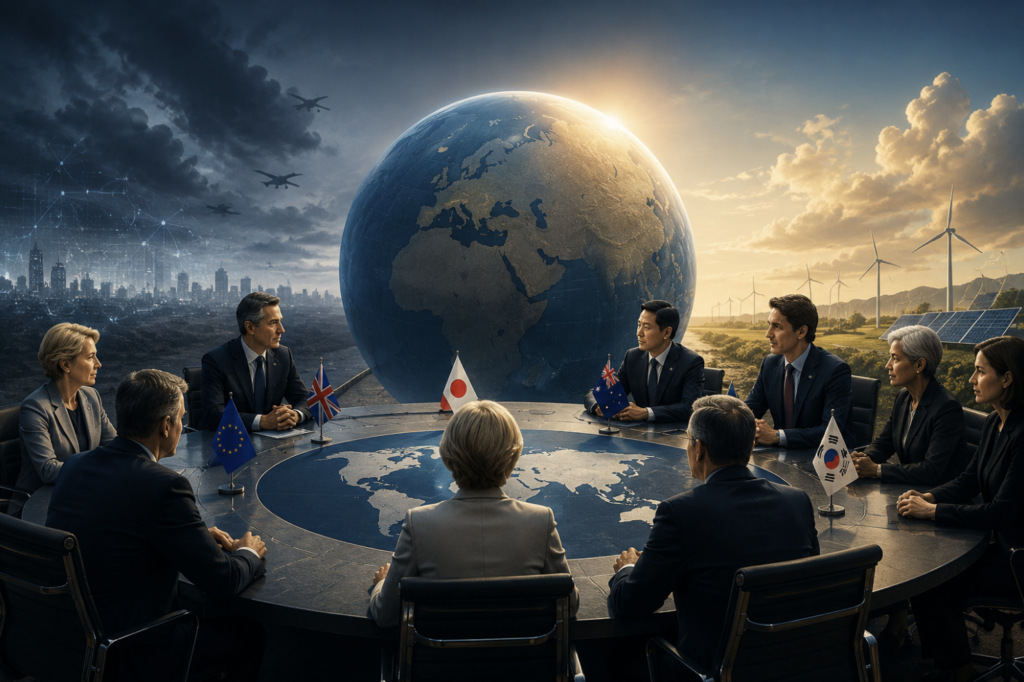
COPENHAGEN, Denmark – Former NATO Secretary General Anders Fogh Rasmussen has called for the creation of a new alliance of democracies capable of defending liberal values and economic security even without dependable American leadership — a striking reflection of growing unease among U.S. allies during Donald Trump’s second presidency.
In remarks that have resonated across European and Asian policy circles, Rasmussen argued that the United States, long regarded as the anchor of the Western alliance, can no longer automatically be viewed as a reliable guarantor of the democratic world order. “We need a new leading force for the free world,” he said, warning that Washington’s increasingly unpredictable foreign policy risks weakening the cohesion of democratic nations at a moment of intensifying geopolitical rivalry.
A “D7” for the Democratic World
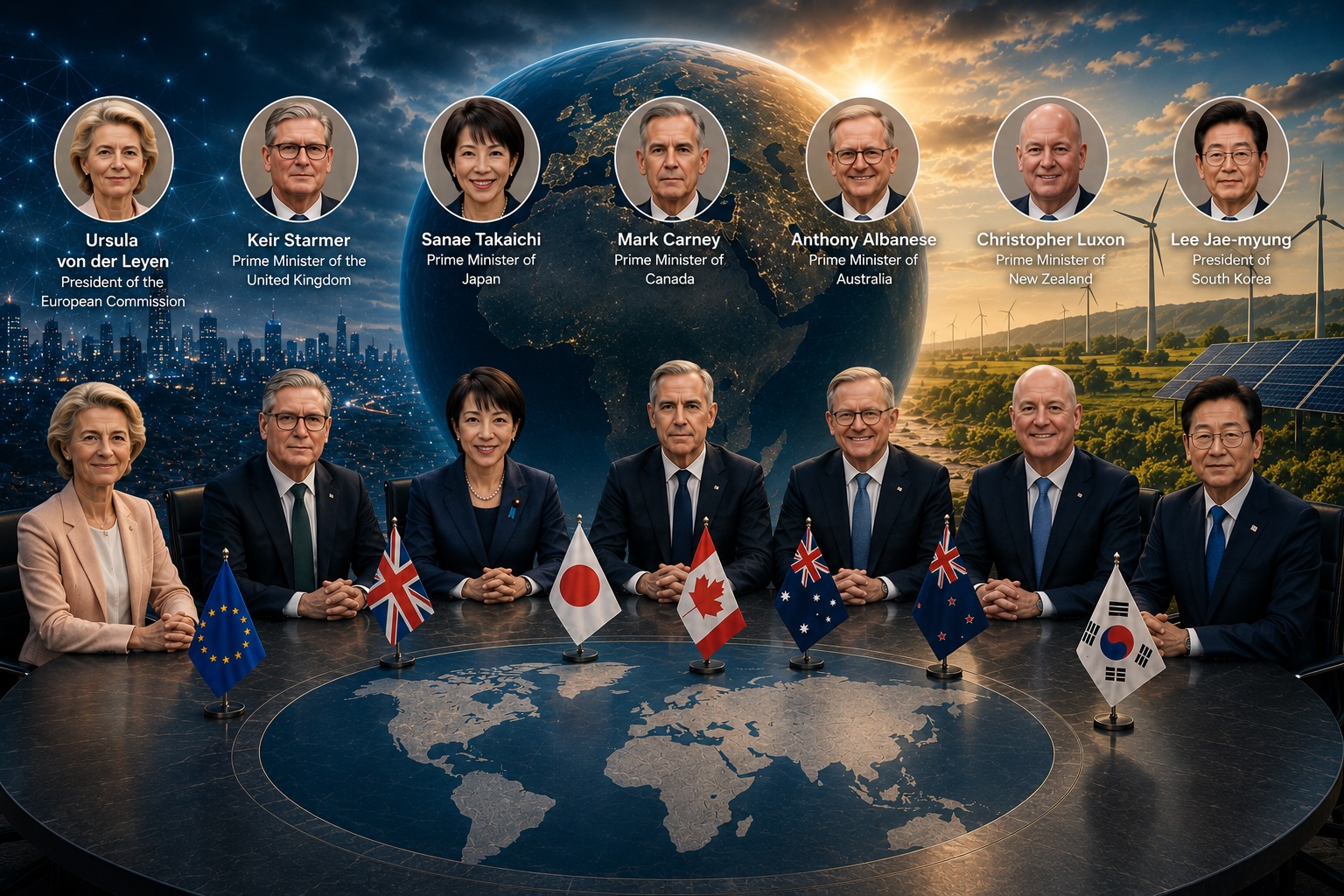
Rasmussen’s proposed alliance — tentatively called the “D7,” with the “D” standing for democracy — would bring together the European Union, United Kingdom, Japan, Canada, Australia, New Zealand and South Korea. Modeled loosely on the existing Group of Seven, the bloc would aim to coordinate policy on trade, technology, strategic resources and democratic resilience.
The proposal reflects a broader trend already visible across allied capitals: the gradual diversification of security and economic partnerships amid uncertainty over the future direction of the United States. European leaders have accelerated discussions about “strategic autonomy,” while Indo-Pacific democracies have deepened cooperation through arrangements such as the Quad and expanded NATO partnerships in Asia.
Rasmussen argued that democracies acting together could wield enormous collective leverage. In particular, he proposed an “economic Article 5” — inspired by NATO’s mutual defense clause — under which economic coercion against one member state would be treated as an attack against all. The concept appears aimed largely at countering pressure from China, though Rasmussen suggested it could also serve as a safeguard against protectionist measures or political pressure originating from Washington itself.
Anxiety Over Trump’s Foreign Policy
The remarks come amid renewed transatlantic tensions under President Donald Trump, whose administration has revived disputes with European allies over trade, defense spending and territorial questions. Rasmussen specifically referenced tensions surrounding Greenland and U.S. pressure on Denmark, arguing that threats among democracies only strengthen authoritarian rivals such as Vladimir Putin.
His comments echo concerns increasingly voiced by European policymakers, diplomats and defense analysts who fear that a more transactional White House could weaken NATO solidarity and embolden adversaries. Several European governments have in recent months accelerated military spending plans and pursued independent industrial and defense strategies in anticipation of a less predictable U.S. commitment to Europe’s security architecture.
At the same time, Rasmussen’s proposal is likely to face skepticism from some analysts who argue that no democratic coalition can realistically replace American military and financial power. The United States remains the dominant force within NATO and the world’s largest economy, and many allied governments remain cautious about openly supporting initiatives that could be interpreted as a post-American alternative order.
Technology, Supply Chains and the Global South
Beyond defense and diplomacy, Rasmussen’s vision places strong emphasis on technological governance and economic coordination. He argued that democratic nations should jointly establish standards for emerging technologies, reduce dependence on vulnerable supply chains for critical minerals and energy resources, and expand investment in the Global South to provide alternatives to Chinese financing initiatives.
Those ideas align with broader policy debates already underway in Brussels, Tokyo, Seoul and Ottawa, where governments are increasingly focused on economic security, semiconductor independence and strategic competition with Beijing. Western governments have also intensified efforts to secure access to lithium, rare earths and other materials essential for the energy transition and advanced manufacturing.
While Rasmussen’s “D7” remains a conceptual proposal rather than a formal diplomatic initiative, the discussion itself underscores a profound shift taking shape across the democratic world: an emerging recognition that alliances built after World War II may need to evolve in response to a more fragmented geopolitical era — and to growing uncertainty about the role the United States intends to play within it.