
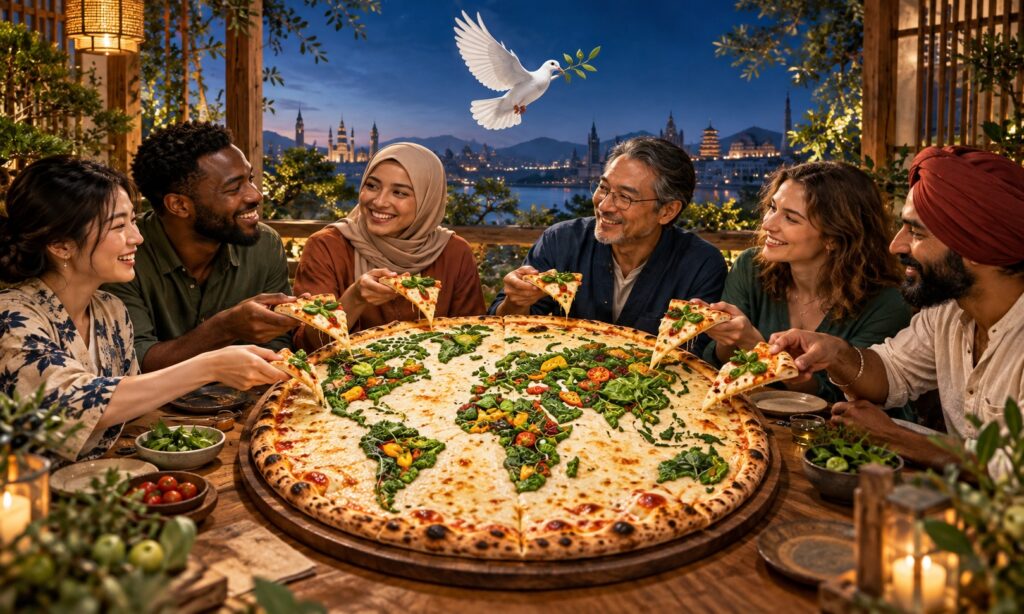
HO CHI MINH CITY, Vietnam – The ambition sounds like a peace movement: “Make the World Smile for Peace.” Behind it is Pizza 4P’s, a restaurant business founded in Vietnam by Japanese entrepreneurs. Its proposition is that a shared meal, thoughtful hospitality and more responsible food production can make people feel more connected—to one another and to their surroundings.That philosophy now faces a larger commercial test. The company opened its first American restaurant in Brooklyn this summer, extending a business that began in Ho Chi Minh City in 2011. Its arrival in New York brings an unusually idealistic restaurant concept into a demanding pizza market.
From Personal Loss to a Shared Table
Co-founder Yosuke Masuko traces the idea to the death of a close friend by suicide and his subsequent search for happiness. Building a pizza oven with friends in Tokyo in 2005, he found that informal gatherings around food created a sense of belonging. Six years later, he and Sanae Takasugi opened their first restaurant in Vietnam.
The peace message eventually became a public campaign. In 2020, the company served pizzas pairing ingredients associated with India and Pakistan, Israel and Palestine, and China and the United States. According to Pizza 4P’s, proceeds from those special pizzas went to the United Nations Peacebuilding Fund. The exercise offered a culinary metaphor for coexistence, alongside fundraising.
Its latest International Peace Day message, published on September 23, 2026, adopted a quieter approach: inviting people to reflect on what had made them smile that day. The emphasis remained on everyday connection rather than a specific foreign-policy agenda.
The Business Behind the Idealism
Japanese coverage has examined how that philosophy translates into restaurant operations. The food publication Ryori Tsushin described waste sorting in Cambodia and composting initiatives in Vietnam, while reporting the founders’ concern that opening more restaurants could also increase environmental harm. Their argument was that commercial growth creates resources for social action, even as it introduces new costs.
International expansion sharpens that tension. Speaking to Vietnam Investment Review in January, Masuko presented New York as a test of the brand’s quality and originality. He also acknowledged that maintaining food and service standards becomes harder as the business grows.
The company has been similarly candid about environmental performance. Introducing its 2025 sustainability report this year, it said: “Progress has been slower than we hoped.” Waste infrastructure, suppliers and transition costs differ across markets, it explained, requiring locally adapted approaches.
A Mission That Must Be Measured
Taken together, these accounts suggest that Pizza 4P’s offers a practical experiment in combining hospitality with social purpose. Its peace campaigns provide symbolism and visibility; its purchasing, employment and waste practices provide more concrete grounds for assessment.
As the business expands, the central question is whether its operating results can keep pace with its message. More restaurants can spread an idea. Demonstrating lasting social and environmental benefits requires evidence beyond a compelling slogan.