
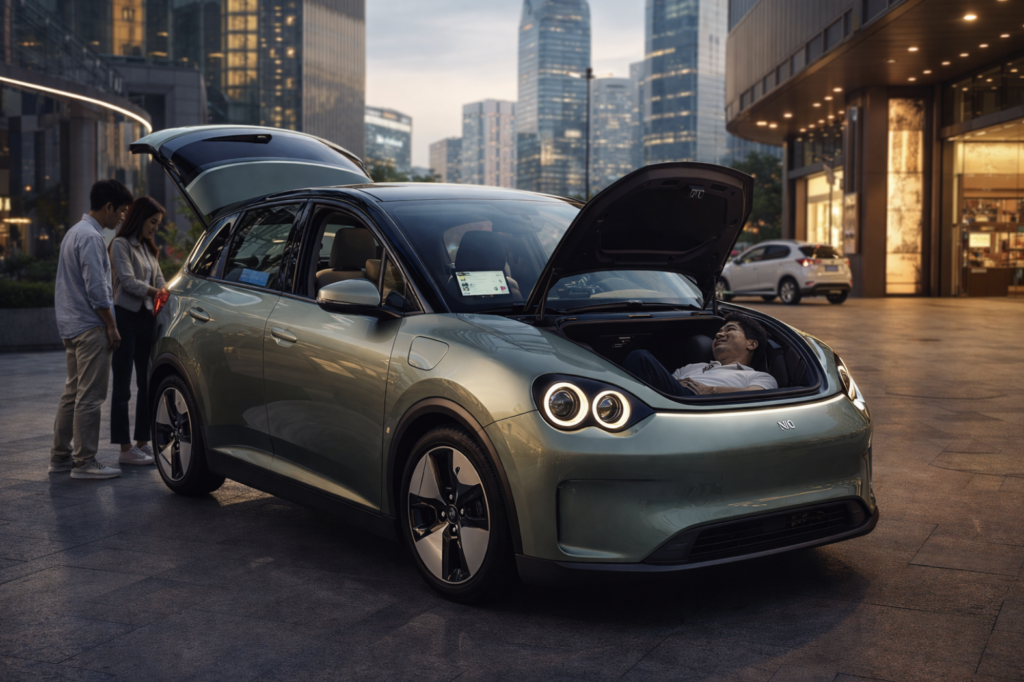
SHENZHEN, China — In a city where the future seems to arrive a little earlier than everywhere else, it is perhaps fitting that even a casual visit to a shopping mall can turn into an unexpected encounter with the next generation of mobility.
That is precisely how this story began.
The author of this report does not consider himself a natural enthusiast of electric vehicles. Concerns about high upfront costs, limited driving range, rapidly evolving battery technology and comparatively weak resale values have long cast a shadow over the appeal of EVs. Yet in Shenzhen — China’s southern innovation powerhouse — curiosity has a way of overriding skepticism.
Amid a growing presence of automotive showrooms inside modern retail complexes, one vehicle in particular stood out: the compact, newly introduced NIO Firefly. Its design was striking, almost playful, yet undeniably refined. Within minutes, a conversation with sales staff turned into an invitation — and shortly thereafter, into a test drive.
What followed was, quite unexpectedly, a shift in perspective.
Compact Outside, Spacious Within
At first glance, the Firefly presents itself as a typical urban car: compact dimensions tailored for crowded city streets and tight parking spaces. But stepping inside reveals a different story.
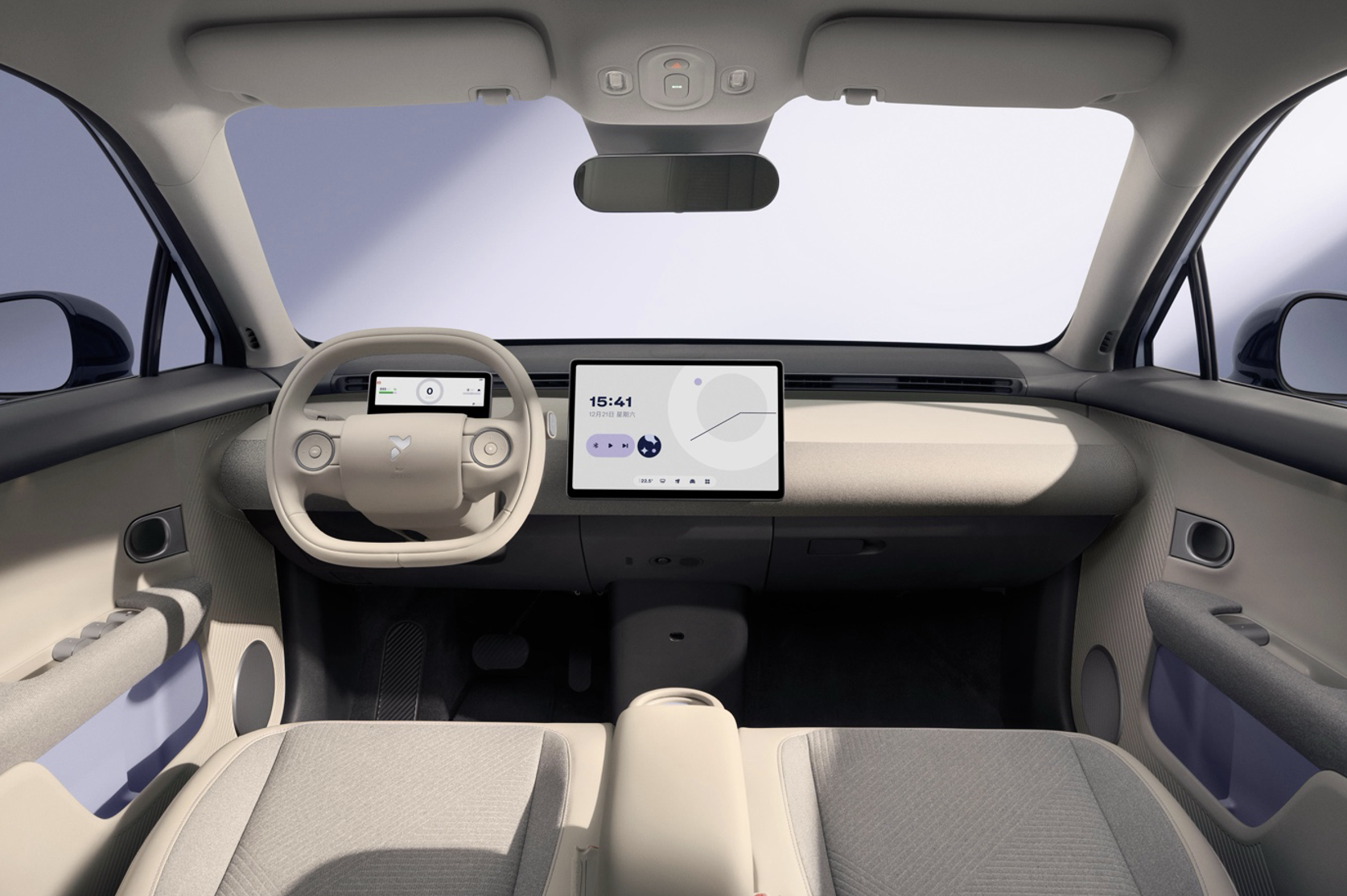
The cabin feels remarkably spacious — far beyond what its exterior footprint would suggest. Particularly notable is the generous legroom in the rear seats, an area where many vehicles in this segment tend to compromise. Even taller passengers can sit comfortably, which is rarely the case in compact hatchbacks.
Large window surfaces further enhance the sense of openness. The front windshield, in particular, offers an expansive, almost panoramic field of vision. The absence of intrusive design elements allows for an unobstructed view of the road, contributing to both comfort and safety.

A Digital Experience on Wheels
Dominating the dashboard is a large, tablet-style central display — the control hub of the entire vehicle. While touchscreen interfaces are no longer unusual in modern cars, the Firefly’s system stands out for its responsiveness and depth.
Nearly every aspect of the driving experience can be customized here, from seat adjustments to driving modes and advanced driver assistance features. The interface is intuitive, even for first-time users, and integrates seamlessly with online services.
Entertainment options are also integrated into the system. During charging breaks, users can access streaming platforms and digital content — a small but telling example of how EVs are reshaping the concept of downtime on the road.
Sound Quality That Defies Its Class
Perhaps one of the most surprising aspects of the Firefly is its audio system.
The sound quality is immersive, rich and balanced — comparable to what one would typically expect from significantly more expensive premium vehicles. The cabin effectively becomes a concert space, whether for music, podcasts or films. For a car positioned in the entry-level EV segment, this level of acoustic performance is unusual and noteworthy.
Practicality Meets Clever Design
Beyond comfort and technology, the Firefly delivers in everyday usability.
Storage space is abundant. In addition to the rear trunk, the vehicle features a front storage compartment (commonly referred to as a “frunk”), providing extra room for smaller items. The rear seats can be folded down to accommodate larger cargo, making the car surprisingly versatile for shopping trips or short journeys out of town.
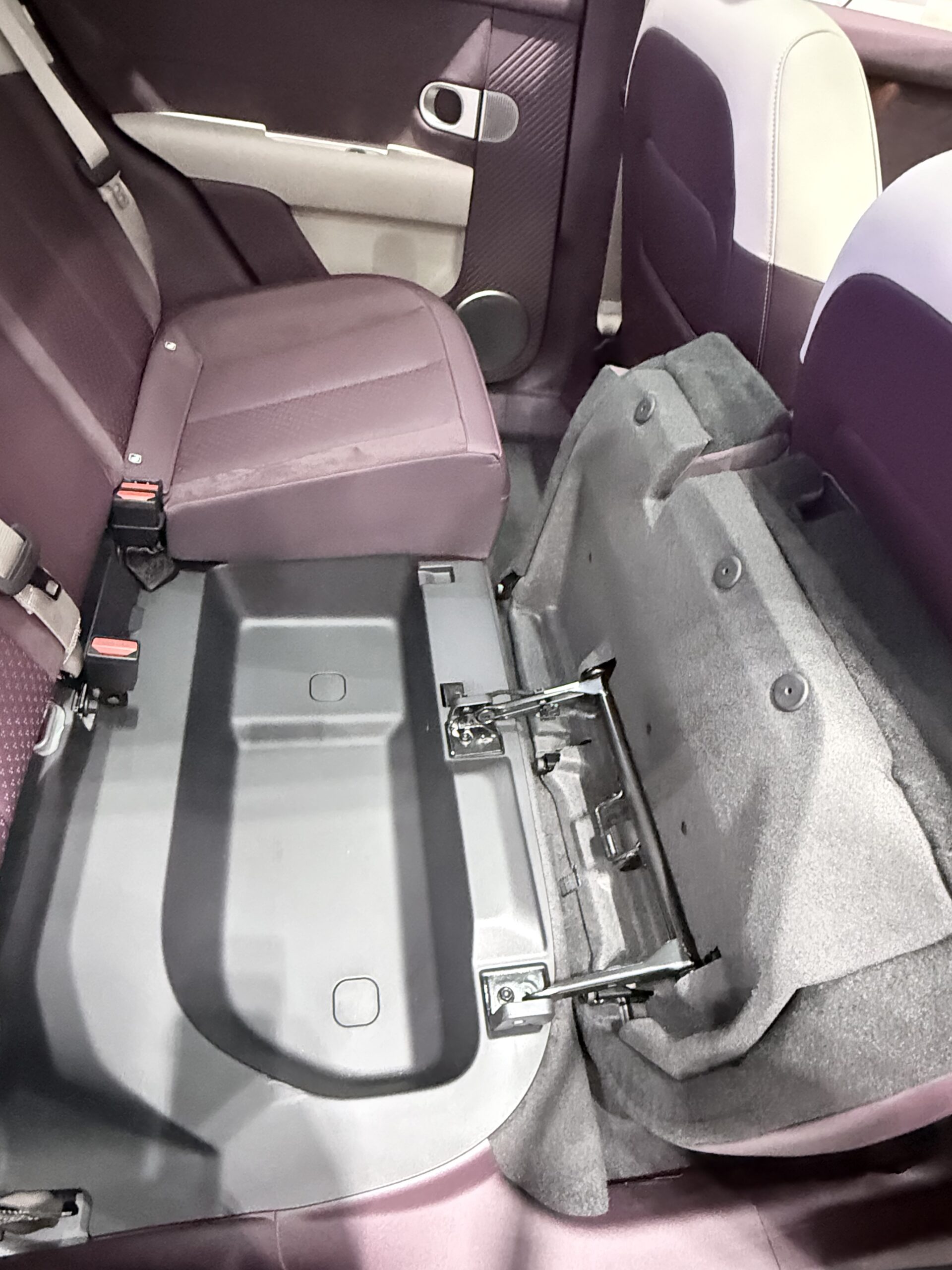
A particularly clever detail is the hidden storage beneath the rear seating area — ideal for keeping valuables out of sight. These small design choices reflect a thoughtful approach to real-world usage.
Driving, Simplified — and Assisted
On the road, the Firefly proves easy and smooth to drive. Its electric drivetrain delivers quiet acceleration and a relaxed driving experience, well suited for urban environments.
More impressive, however, are the advanced driver assistance systems. The vehicle can be set to a semi-autonomous driving mode, where it maintains lane position, adapts to speed limits and adjusts to surrounding traffic conditions. While not fully autonomous, the system significantly reduces driver workload, especially in dense city traffic.
All these features are easily controlled via the central display, including memory settings for mirrors and seating positions.

Parking at the Push of a Button
Parking — often a stressful task in crowded cities — becomes almost effortless.
Using the touchscreen interface, the driver can select a parking space, and the vehicle takes over the maneuver entirely. In tight underground garages, this feature proves particularly useful.
Even more futuristic is the remote control capability via smartphone. The driver can exit the vehicle and guide it forward or backward into position using an app — a function that feels more like something out of a technology demonstration than a production car.
The Price That Raises Eyebrows
And then comes the most unexpected element of all: the price.
In China, the Firefly is available at a starting price equivalent to roughly €10,000 — an almost disruptive figure in the electric vehicle market. At this level, it undercuts not only Western EVs but also many conventional combustion-engine vehicles.
However, for European buyers, the situation looks different. Import costs, taxes and regulatory requirements push the expected retail price to roughly three times that amount.
This disparity raises a broader question about global automotive pricing — and highlights the competitive advantage Chinese manufacturers currently hold in their domestic market.
A New Perspective on Electric Mobility
The Firefly may not eliminate all the concerns traditionally associated with electric vehicles. Its battery capacity, while sufficient for urban use, does not yet rival that of larger EVs designed for long-distance travel.
But that may not be the point.
Instead, the Firefly represents a different approach: a city-focused, technology-rich, and surprisingly affordable electric vehicle that prioritizes practicality, comfort and user experience.
For drivers who have remained unconvinced by EVs so far, it offers something rare — not just specifications on paper, but a genuinely compelling real-world experience.
Conclusion
The test drive in Shenzhen did not just introduce a new car. It challenged long-held assumptions.
The NIO Firefly is not a luxury vehicle, nor does it aim to be. Yet in many respects — from interior space to digital integration and driving assistance — it delivers features that rival far more expensive models.
For anyone still skeptical about electric mobility, this small car might just be worth a closer look.
Sometimes, the future arrives quietly — in the form of a compact city car parked in a shopping mall. (AT/hz)
Photos: AT/hz, NIO