
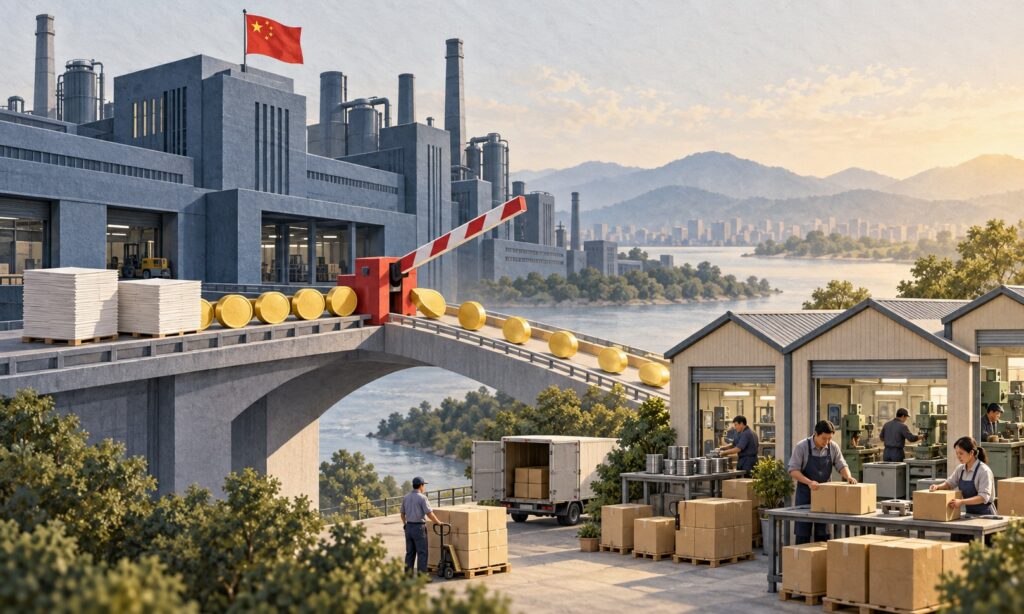
BEIJING, China – For China’s smaller businesses, one of the most useful forms of government support may be help collecting money they have already earned.
A new State Council initiative offers that prospect. The notice, dated September 3 and published September 10, strengthens pressure on large companies to pay smaller suppliers, with particular obligations for centrally controlled state-owned enterprises. It offers a potentially meaningful improvement in business conditions, though its impact will depend on enforcement.
Cash That Suppliers Can Use
Central SOEs must pay small and medium-sized enterprises entirely in cash. Leading companies more broadly are encouraged to commit to cash payment within 60 days of delivery. Government procurement projects must also use cash. Here, cash means monetary settlement, ordinarily by bank transfer.
The notice targets deliberate extensions of payment periods, including scrutiny of buyers with large unpaid balances and ample cash assets. It also strengthens requirements for payments to flow through contractors to subcontractors.
The distinction between money and a promise to pay matters. Suppliers accepting commercial bills or electronic receivables certificates may still have to wait for usable funds—or incur a discount to obtain them sooner. Reuters documented these concerns among automotive suppliers when earlier payment reforms took effect in 2025.
For a small manufacturer, faster settlement could mean fewer emergency loans, more predictable payroll and enough working capital to accept another order. The economic benefit comes from reducing the cost of waiting.
The Long Wait Behind a State Contract
The difficulty of collecting from state-owned customers has a long history. In February 2019, People’s Daily’s overseas edition reported that central SOEs had identified 111.6 billion yuan in overdue payments in dealings with private enterprises. Officials said 83.9 billion yuan had been repaid by the end of January.
Those figures describe an earlier cleanup campaign, not today’s outstanding debt. But they establish that payment problems involving the state sector were substantial enough to require intervention years before the latest notice. The same report warned about new arrears accumulating while old ones were being cleared.
The obstacles extend beyond an invoice’s nominal due date. China’s revised payment regulation, effective June 2025, addressed delayed inspection and acceptance, internal payment procedures and demands to await audit results. It prohibited large buyers from making payment to SMEs conditional on first receiving money from another customer. These provisions identify ways suppliers’ money can become trapped within contracting and approval processes.
State ownership, however, is not the only dividing line. Payment disputes also affect private buyers and chains of businesses that owe one another money. The 2019 People’s Daily report explicitly described that wider problem.
Chinese Coverage Combines Support With Warnings
Xinhua’s September 10 account presented the new initiative as a coordinated effort to improve payment practices, supervision and financing. It emphasized the government’s objective of healthier relationships between large and small businesses. That coverage conveyed the policy’s intended benefits; it did not establish that suppliers were already collecting faster.
Earlier Chinese commentary helps explain why implementation will be closely watched. In June 2025, China Economic Weekly welcomed faster-payment commitments while warning about concealed delays. Its reporting described suppliers being asked to begin work or deliver goods before signing contracts, leaving them with weaker evidence if payment became disputed.
Fear of losing repeat orders helped sustain those arrangements, the magazine reported. An unnamed business executive described managing cash as “walking a tightrope,” worrying that late receipts would prevent repayment of loans or settlement with suppliers. These observations concerned relationships with large companies generally, rather than SOEs alone.
That commercial dependence poses a practical challenge: a supplier may possess a legal right to payment while fearing the consequences of pressing its customer to comply.
A Promising Shift, With an Enforcement Test
One provision could help change who finances the supply chain. Large companies are supported in using bank loans and bond financing to replace outstanding supplier payables. The intended result is prompt cash payment to smaller businesses.
Economically, that could move financing costs toward the purchaser and financial institutions, giving suppliers greater control over their own working capital. But lending must still distinguish a temporary shortage of cash from a business unable to repay its debts.
The history of automotive payment rules illustrates the enforcement challenge. On September 7, regulators tightened requirements again, addressing acceptance delays and non-cash instruments after earlier 60-day pledges.
For SMEs, the new initiative is reason for cautious optimism. Its success will be measured in shorter waits, lower borrowing costs and money reaching subcontractors. A government promise becomes business relief when the payment reaches the supplier’s account.
Sources: People’s Daily, Reuters, Xinhua, China Economic Weekly,