
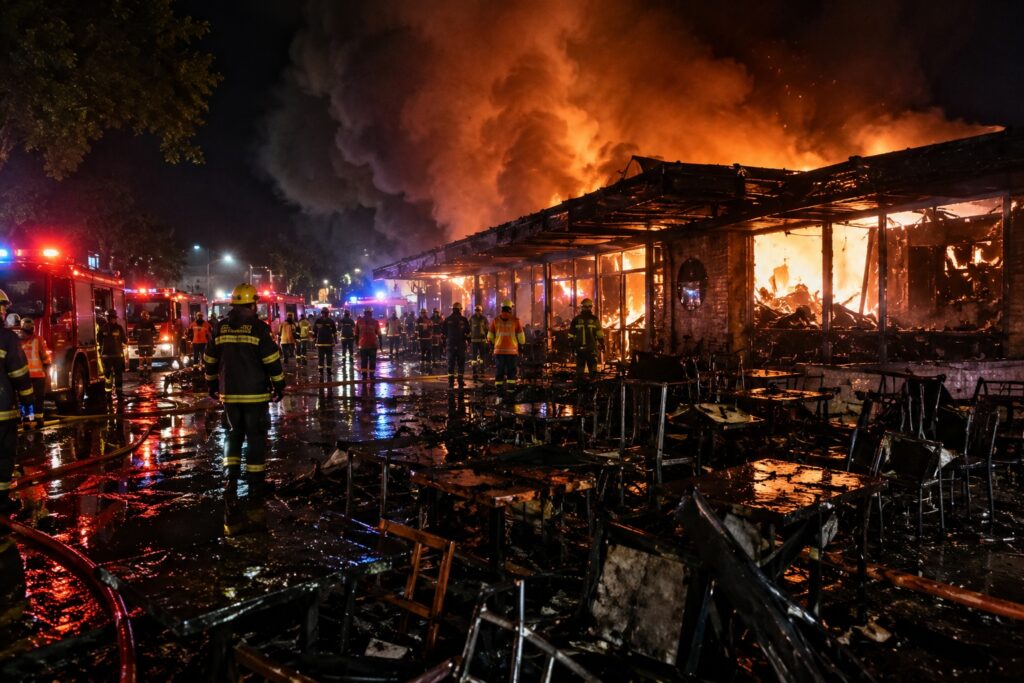
BANGKOK, Thailand — A devastating fire tore through a crowded pub in northern Bangkok shortly before midnight on Monday, killing at least 27 people and injuring dozens more in one of Thailand’s deadliest entertainment venue disasters in recent years, authorities said. The tragedy has once again drawn attention to longstanding concerns over fire safety regulations, emergency exits and enforcement at nightlife establishments.
Thai Prime Minister Anutin Charnvirakul visited the scene in the early hours of Monday and confirmed the death toll, while officials said the number of casualties could change as victims continue to be identified and several injured patrons remain in critical condition. Rescue authorities reported that more than 60 people were transported to hospitals, including over 20 listed in critical condition.
The fire broke out around midnight at the Na Ladprao (Rong Beer Na Ladprao) pub in Bangkok’s Chatuchak district. Firefighters contained the blaze within approximately 30 minutes, but not before thick smoke engulfed the building. Dramatic videos captured by first responders showed flames bursting through the entrance as patrons fled into the streets while dense black smoke billowed into the night sky.
Preliminary witness accounts suggest a musician performing at the venue noticed smoke emerging from an electrical circuit breaker near the stage moments before the power failed. Survivors reported hearing an explosion, after which smoke rapidly filled the venue, causing panic and severely limiting visibility. Many victims were later discovered inside restroom areas at the rear of the building, where they had apparently sought refuge while searching for an escape. Authorities are investigating whether inadequate emergency exits or blocked evacuation routes contributed to the high death toll. The exact cause of the fire has not yet been determined.
Photographs from the aftermath revealed a heavily damaged interior, with charred tables, collapsed furnishings and extensive structural damage. Emergency responders also recovered personal belongings, including mobile phones belonging to victims, as forensic teams began examining the scene.
A Familiar Pattern of Preventable Tragedies
The Bangkok disaster has revived painful memories of previous nightclub fires that exposed weaknesses in Thailand’s enforcement of building safety standards.
In August 2022, a fire at the Mountain B music pub in Chonburi Province killed 14 people and injured dozens, prompting promises of stricter inspections of entertainment venues.
Even more devastating was the Santika nightclub fire during New Year’s celebrations in Bangkok on January 1, 2009. That disaster claimed 66 lives and injured more than 200 people after an indoor fireworks display ignited combustible materials inside the crowded nightclub. Investigations at the time identified multiple safety failures, including insufficient emergency exits and violations of occupancy regulations.
Monday’s tragedy has renewed questions over whether lessons from those earlier disasters were fully implemented and consistently enforced across Thailand’s nightlife industry.
Domestic Response Focuses on Safety Enforcement
Thai authorities have launched a formal investigation into the cause of the fire while conducting inspections of the venue’s licensing status, electrical systems and compliance with fire safety regulations. Officials are expected to review evacuation procedures, emergency exit accessibility and building safety certifications as part of the investigation.
Domestic analysts and public discussion have largely centered on recurring concerns about electrical safety, emergency preparedness and regulatory oversight of entertainment venues. Public reaction has also focused on reports that many victims became trapped by smoke near the rear of the building, reinforcing calls for stricter enforcement of fire codes, more frequent inspections and improved evacuation planning for crowded public venues. While investigators have not reached definitive conclusions, officials have emphasized that determining the precise cause remains a priority before assigning responsibility.
Photo: AI generated