
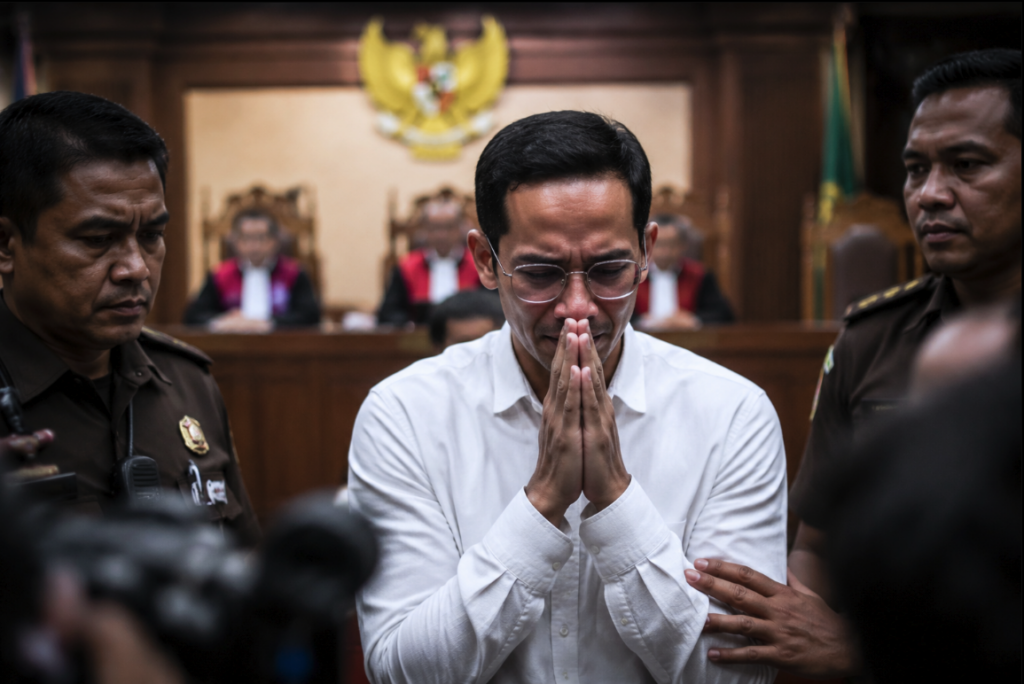
JAKARTA, Indonesia — Nadiem Makarim, the co-founder of Southeast Asia’s ride-hailing giant Gojek and a former education minister under President Joko Widodo, was sentenced to 10 years in prison on corruption charges tied to a multimillion-dollar school laptop procurement program.
The court also ordered Makarim, 41, to pay restitution of 809 billion rupiah (about $45 million). Failure to pay would extend his prison term by an additional five years, effectively raising the sentence to up to 15 years, plus a separate fine that could add further jail time if unpaid.
Makarim, who pleaded not guilty, has said he will appeal the ruling.
A Case Built on Procurement Decisions and Alleged Conflicts of Interest
The case centers on Indonesia’s 2021–2022 purchase of Chromebook laptops for public schools. Prosecutors argued the devices were poorly suited for parts of Indonesia with limited internet access, despite earlier internal assessments within the education ministry noting that connectivity requirements would limit usability in remote regions.
Authorities alleged that after meetings with representatives from Google in 2020—an investor in Gojek’s holding structure—Makarim shaped procurement specifications that effectively favored the Chrome operating system. Prosecutors further claimed this design made Google’s ecosystem dominant in Indonesia’s education infrastructure and caused state losses estimated at $125 million.
Judges ultimately ruled that while unlawful personal enrichment was not proven, Makarim had abused his authority and acted with a conflict of interest due to his continued minority stake in Gojek during his time in office.
Defense: Cost Savings, Not Corruption
Makarim denied any personal financial gain and rejected claims that Google’s investment in Gojek influenced government procurement decisions. His legal team argued that the Chromebook rollout reduced costs for the state and that the disputed 809 billion rupiah remained within corporate accounts, never benefiting him personally.
In court, however, judges emphasized that corruption under Indonesian law can include abuse of authority even without direct personal enrichment, a legal standard that broadened the scope of the conviction.
Public Support and Political Undercurrents
Outside the courthouse in Jakarta, dozens of supporters—including Gojek drivers in branded jackets—gathered with banners reading “We are with Nadiem” and “Free Nadiem.” Many watched the proceedings via livestream in nearby rooms, reacting emotionally as the verdict was read.
Makarim was seen crying in court and later told reporters he felt abandoned by the system. “I do not know whom I should ask for help,” he said, adding that he would appeal and placing his hope in “the Indonesian people.”
Critics See Political Overtones
The verdict has intensified debate among Indonesian legal analysts, activists, and political observers, some of whom argue the prosecution reflects broader political tensions rather than purely legal accountability.
Some lawyers and anti-corruption advocates cited by Indonesian media and international reporting have suggested the case reflects selective enforcement, where corruption charges are increasingly used against politically exposed figures. Others have drawn parallels to earlier cases involving allies of Joko Widodo that were later followed by pardons under President Prabowo Subianto.
Human rights groups, including Amnesty International’s Indonesia office, have warned that high-profile convictions like Makarim’s may discourage young professionals from entering government service, particularly those from the private tech sector.
A Broader Climate of Youth Discontent
The ruling comes amid growing economic anxiety in Indonesia, where rising living costs and currency pressure have fueled public dissatisfaction. Recent weeks have seen protests across multiple cities, with demonstrators criticizing government economic policies and warning of long-term fiscal strain.
For some younger Indonesians, Makarim—once a symbol of startup-era optimism—now represents both the promise and risk of reform from within the state. As one activist told local media, the fear is no longer only about corruption, but about whether engagement with government itself can become a liability.
Appeal Ahead, Uncertain Political Aftermath
Makarim’s legal team has confirmed plans to appeal the ruling, setting the stage for a prolonged legal battle that could carry significant political implications.
Beyond the courtroom, the case has already become a flashpoint in Indonesia’s broader debate over governance, accountability, and the role of business leaders entering public office—raising questions about whether the country’s anti-corruption framework is strengthening institutions or deepening political divides.
Photo: AI generated