
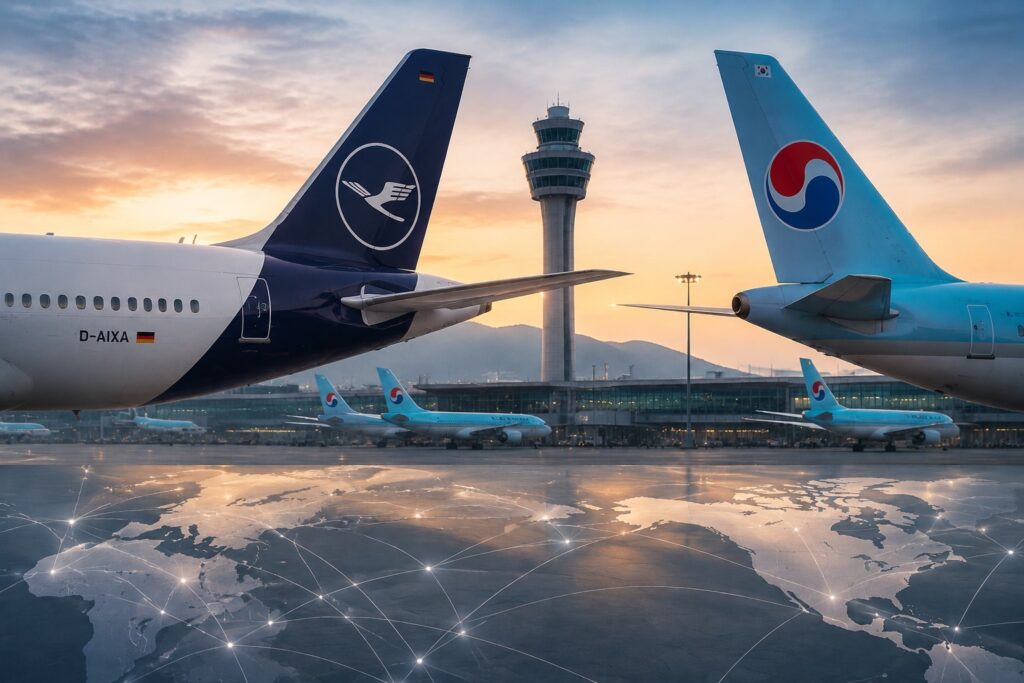
SEOUL, South Korea — Asiana Airlines will officially leave Star Alliance at 11:59 p.m. Korea Standard Time on December 16, 2026, bringing to a close more than two decades as one of the alliance’s key Asian members. The departure marks one of the most significant alliance changes in recent years and reflects the final stage of the airline’s integration into Korean Air, a member of the rival SkyTeam alliance.
Since joining Star Alliance in 2003, Asiana has played a central role in connecting Northeast Asia with Europe, North America, and Southeast Asia through its hub at Seoul Incheon International Airport. Star Alliance praised the airline and its employees for helping deliver the seamless global travel experience that has defined the alliance for more than two decades.
Transition Period Protects Frequent Flyers
To minimize disruption, Star Alliance and Asiana Airlines have established a phased transition for customers.
Passengers enrolled in any Star Alliance frequent flyer program may continue earning miles on Asiana-operated flights departing on or before October 15, 2026. Award tickets and mileage upgrades remain valid for travel completed by December 16, 2026, subject to each airline’s redemption policies. Until the departure date, Star Alliance Gold and Silver members will continue to receive priority services, while Gold members will retain lounge access, including eligible Asiana lounges.
Lufthansa Group Realigns Its Korean Strategy
Among the airlines most affected is the Lufthansa Group, which has maintained a long-standing partnership with Asiana on Europe–Korea routes.
The group has already begun transferring existing bookings to Korean Air from September 2026 to ensure service continuity. At the same time, Lufthansa is reshaping its South Korean strategy by focusing on travelers whose final destination is Seoul rather than onward domestic connections.
The carrier has strengthened cooperation with Jeju Air for domestic air services and established an intermodal partnership with Korail, South Korea’s national railway operator, to improve onward connectivity beyond Seoul. Lounge access at Incheon Airport will also continue under the revised strategy.
Star Alliance Maintains a Strong Presence in Seoul
Although Asiana’s departure reduces the alliance’s footprint in South Korea, Star Alliance says its network at Incheon will remain substantial.
Beginning December 17, 2026, fourteen member airlines—including Air Canada, Air China, Air India, Air New Zealand, EVA Air, Ethiopian Airlines, Lufthansa, LOT Polish Airlines, SWISS, Singapore Airlines, Shenzhen Airlines, Thai Airways, Turkish Airlines, and United Airlines—will continue operating from Incheon.
Collectively, these carriers currently offer more than 1,900 direct flights every month connecting Seoul with 29 international destinations, preserving extensive global connectivity despite Asiana’s exit. Following the transition, Star Alliance will comprise 25 member airlines worldwide.
Domestic Industry Analysis: Consolidation Redefines South Korea’s Aviation Market
Industry analysts view Asiana’s departure as the operational conclusion of South Korea’s largest aviation consolidation.
Following Korean Air’s acquisition of Asiana, the combined airline is expected to become one of Asia’s largest full-service carriers, controlling a majority share of South Korea’s international passenger market. The unified airline will remain within the SkyTeam alliance, making Asiana’s withdrawal from Star Alliance an unavoidable consequence of the merger.
South Korean aviation experts expect several long-term effects:
- Greater market concentration, with Korean Air emerging as the country’s dominant international carrier.
- Improved operational efficiency through integrated fleets, schedules, and loyalty programs.
- More intense competition among global alliances in Northeast Asia as Star Alliance adjusts its regional strategy.
- Expanded multimodal transportation, combining air services with South Korea’s high-speed rail network to strengthen domestic connectivity.
A New Chapter for Global Airline Alliances
The move also reflects a broader transformation across the global airline industry. Recent years have seen alliances increasingly shaped by mergers and strategic investments rather than traditional partnership agreements. As airlines consolidate to improve profitability and network efficiency, alliance memberships have become more fluid than at any point since the major global alliances were formed in the late 1990s.
For travelers, the immediate impact will center on mileage deadlines and loyalty benefits. For the industry, however, Asiana’s departure symbolizes a deeper shift in the competitive landscape of global aviation—one where corporate consolidation is steadily reshaping how international airline alliances compete for passengers and market share.
Source: Lufthansa