
FRANKFURT – It is considered a promising solution for reducing CO2 in the atmosphere: The so-called Direct Air Carbon Capture and Storage (DACCS) technology filters CO2 from the air and stores it permanently. The Lufthansa Group began exploring this innovative process at an early stage and sees it as a complementary instrument in its sustainability strategy.
The Lufthansa Group has now signed a contract with Airbus on the pre-purchase of verified and durable carbon-removal credits of 40,000 tonnes of CO2. The carbon-removal credits will be issued by Airbus through its ACCO (Airbus Carbon Capture Offer) service. The certificates will be available from 2026 and an annual purchase of carbon-removal credits of 10,000 tonnes of CO2 has been agreed for four years. The signing of the contract follows a joint declaration of intent from 2022.
“The Lufthansa Group is strongly committed to making air transport more sustainable and to achieving net zero carbon emissions by 2050. This includes billion-euro investments in continuous fleet modernization and our strong commitment to Sustainable Aviation Fuels. Technical CO2 removal solutions like advanced and direct carbon capture and storage processes will play a complementary role in achieving our decarbonization goals”, says Caroline Drischel, Head of Corporate Responsibility at the Lufthansa Group.
“The Lufthansa Group was one of the very first aviation companies to work with Airbus to explore the potential of direct air carbon capture and storage solutions”, says Nicolas Chrétien, Head of Environment & Sustainability at Airbus. “As the aviation industry moves towards net zero CO2-emissions by 2050, carbon removal will play an important role in addressing remaining emissions. We are very pleased to go one step further with the Lufthansa Group and keep up the momentum to make decarbonized air travel a reality.”
This is how DACCS technology works
Direct Air Carbon Capture and Storage is a high-potential technology that involves filtering CO2 emissions directly from the air using high powered fans. Once removed from the air, the CO2 is stored deep underground in geologic saline formations. As the aviation industry cannot capture CO2 emissions released into the atmosphere at source, a direct air carbon capture and storage solution would allow the sector to extract CO2 emissions from its operations directly from atmospheric air. In addition to the comprehensive measures that companies are taking to reduce CO2 emissions, according to the Intergovernmental Panel on Climate Change (IPCC), carbon removal is required to support the achievement of net-zero targets.
Additionally, the Direct Air Carbon Capture technology will be an important building block for the production of next-generation Sustainable Aviation Fuels. For SAF production from renewable energies with the innovative Power-to-Liquid or Sun-to-Liquid technologies, CO2 is for instance captured from the atmosphere and processed further. For this, a Direct Air Capture infrastructure will be needed. In IATA’s Infrastructure Roadmap, the development and the promised success of SAF are closely linked to the adoption of Direct Air Capture infrastructures. The Lufthansa Group is involved in numerous initiatives to bring these promising next generation SAF technologies to market maturity.
The Airbus carbon-removal initiative is based on Airbus’ partnership with 1PointFive that includes the pre-purchase of carbon-removal credits of 400,000 tonnes of CO2 to be delivered over four years. The US-based company is working closely with leading organizations to develop practical pathways to achieve global climate targets.
Lufthansa Group pursues ambitious sustainability goals
The Lufthansa Group has set itself ambitious climate protection goals and aims to achieve a neutral CO₂ balance by 2050. Already by 2030, the Lufthansa Group wants to halve its net CO₂ emissions compared to 2019 through reduction and compensation measures. The reduction share of the 2030 target was validated by the independent Science Based Targets initiative (SBTi) in August 2022. The Lufthansa Group was the first airline group in Europe with a science-based CO₂ reduction target in line with the goals of the 2015 Paris Climate Agreement.
For effective climate protection, the Lufthansa Group is focusing in particular on accelerated fleet modernization, the use of Sustainable Aviation Fuel (SAF), the continuous optimization of flight operations, and offers for its private travelers and corporate customers to make a flight or the transport of cargo more sustainable. In addition, the Lufthansa Group has been actively supporting global climate and weather research for many years. The Lufthansa Group’s commitment to sustainability is rated positively and above the industry average by independent rating organizations.
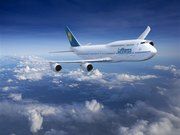
Photo: Lufthansa
I don’t think the title of your article matches the content lol. Just kidding, mainly because I had some doubts after reading the article.
Lufthansa committing to 40,000 tonnes of verified carbon removal credits through Direct Air Capture technology signals that aviation decarbonization strategies are moving beyond offsetting toward actual atmospheric CO2 removal which represents a meaningful shift in how airlines approach net zero targets.
Aviation decarbonization rarely moves fast enough but this Lufthansa and Airbus commitment around direct air carbon capture feels like genuine progress beyond typical offsetting schemes. Securing 40,000 tonnes across four years alongside fleet modernization and sustainable fuels shows a layered strategy rather than relying on any single solution alone.
Very informative content — clear, engaging, and easy to follow. It’s great to learn how innovative carbon-removal technologies can support sustainability efforts in aviation. Thanks for sharing these valuable insights, and keep up the excellent work!
What caught my attention here is the idea that carbon removal is being treated as a complement rather than a replacement for emission reductions. A lot of discussions around sustainability focus only on offsets, but reducing emissions and removing existing CO2 seem like two different challenges. I’m curious to see how effective DACCS will be once it operates at a larger scale, because the technology sounds promising but still relatively new. The next few years should give a better picture of its real-world impact.
I read about Lufthansa teaming up with Airbus on this carbon removal thing and it sounds ambitious, but I’m still a bit unsure how scalable DACCS really is in aviation long term. Capturing CO2 after it’s already in the air feels like a backup plan more than a real solution, even if it helps. Also wondering how much of this is actually reduction vs offsetting on paper. The idea is interesting tho, especially linking it with SAF production, but real impact will depend on execution not just contracts and targets.