
Study Finds Cyclone-Driven Floods and Landslides Killed Nearly 7 Percent of Global Tapanuli Orangutan Population
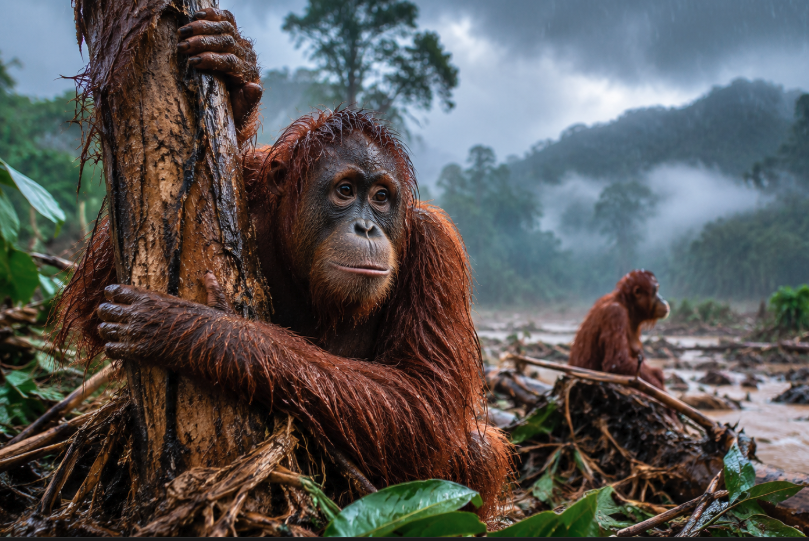
JAKARTA, Indonesia — A devastating cyclone that unleashed days of torrential rain, flooding and landslides across Indonesia’s Sumatra Island has pushed the critically endangered Tapanuli orangutan closer to extinction, according to a new scientific study that underscores the growing impact of climate-driven disasters on vulnerable wildlife populations.
Researchers reported that Cyclone Senyar, which struck Sumatra in late November 2025, likely killed at least 58 Tapanuli orangutans — approximately 7 percent of the species’ entire global population and nearly 10 percent of the animals living within the most severely affected habitat areas. The findings, published Wednesday, represent the most comprehensive assessment yet of the storm’s ecological consequences.
The Tapanuli orangutan, recognized as a distinct species only in 2017, is the rarest great ape on Earth. Fewer than 800 individuals are believed to survive, all confined to the Batang Toru forest ecosystem in North Sumatra. Conservation scientists have long warned that the species cannot withstand annual population declines exceeding 1 percent without facing eventual extinction.
“This level of mortality is far beyond what the species can sustain,” the study’s authors concluded, warning that the losses from a single weather event could reverse years of conservation efforts.
Climate Change Intensifies Risks
Cyclone Senyar became Southeast Asia’s deadliest natural disaster of 2025, claiming more than 1,000 human lives and causing widespread destruction across the region. While the storm itself was an unusual meteorological event, researchers argue that human-induced climate change likely increased the intensity of the extreme rainfall that triggered catastrophic landslides and flash floods throughout the orangutans’ habitat.
The study suggests that the true ecological toll may be significantly higher than current estimates. Researchers noted that their calculations do not account for indirect impacts such as the destruction of forest canopy, reduced food availability, habitat degradation, and long-term reproductive disruption among surviving animals.
In the weeks following the cyclone, wildlife observers reported a dramatic decline in orangutan sightings, fueling concerns that many individuals had been swept away by landslides or buried beneath debris. Humanitarian teams working in the affected region later discovered what appeared to be the remains of a Tapanuli orangutan partially buried in mud and fallen timber.
A Species Under Multiple Pressures
The findings arrive amid growing international concern over the combined effects of climate instability, habitat fragmentation and biodiversity loss. Scientists increasingly warn that isolated wildlife populations face heightened vulnerability because extreme weather events can eliminate large portions of a species within a single geographic region.
For years, conservation groups have identified infrastructure development, mining operations, agricultural expansion and hydropower projects as major threats to the Batang Toru ecosystem. In response to the cyclone’s aftermath, Indonesian authorities have temporarily suspended several large-scale development initiatives in the region, including mining, oil palm expansion and hydropower activities, providing researchers with a rare opportunity to reassess environmental risks.
Environmental experts say the pause offers an important chance to strengthen habitat protection and improve disaster-resilience planning for one of the world’s most threatened primate populations.
International Response and Conservation Challenges
Conservation organizations and climate researchers have described the study as a warning for wildlife protection efforts worldwide. The Tapanuli orangutan’s plight reflects a broader global trend in which climate-related disasters are increasingly threatening species already pushed to the brink by human activity.
Recent international biodiversity frameworks, including commitments made under the Kunming-Montreal Global Biodiversity Framework, have emphasized the need to safeguard critical ecosystems and improve resilience against climate impacts. Scientists argue that species with extremely limited geographic ranges, such as the Tapanuli orangutan, should be among the highest priorities for international conservation funding and technical support.
Researchers say long-term survival will require stronger habitat protection, climate-adaptive land-use planning, enhanced monitoring systems, and sustained financial support from the international community.
Preventing the First Modern Great Ape Extinction
The study’s authors warn that the crisis facing the Tapanuli orangutan illustrates the dangerous intersection of climate change, ecological degradation and species vulnerability. Without decisive action, they say, the world’s rarest great ape could become the first great ape species to disappear in the modern era.
Yet scientists maintain that extinction is not inevitable. With stronger domestic protections, science-based conservation policies and coordinated global assistance, they argue there is still time to stabilize the remaining population and preserve one of humanity’s closest evolutionary relatives.
“The window for action is narrowing,” the researchers concluded, “but it remains open.”